A loyal Alaskan Malamute was discovered in conditions that no living creature should ever have to endure, and what rescuers found that day would stay with them forever. Hidden away in a cramped, filthy pigsty, the once-proud dog had been reduced to a fragile shadow of himself, clinging to life in silence. There was no warmth, no comfort, no sense of safety—only the harsh reality of survival in a place never meant for him.
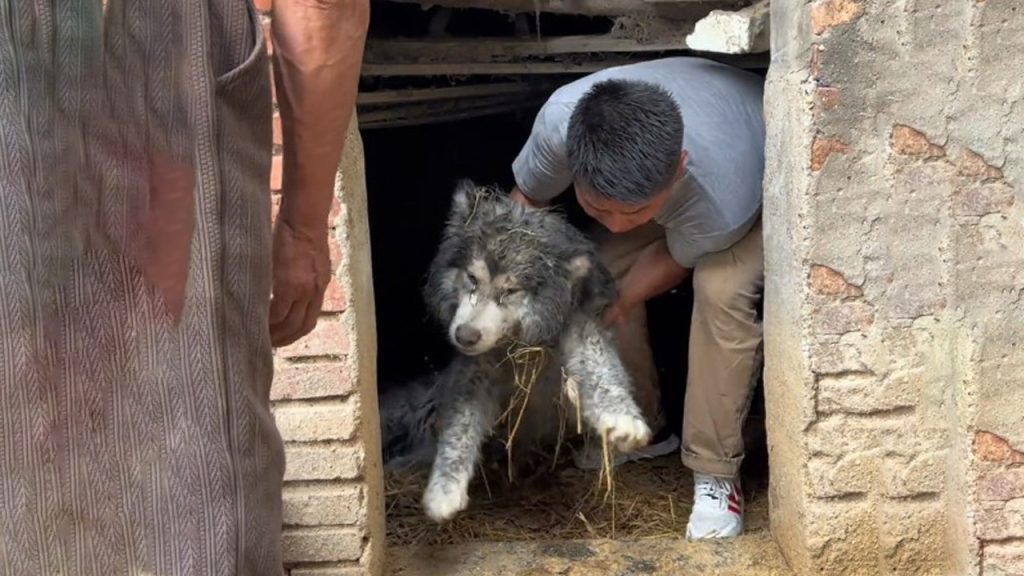
When the rescue team first arrived, they were met with a heartbreaking sight. The dog’s body told a story of prolonged suffering. His thick coat, once meant to protect him from cold northern climates, was tangled and caked with dirt from being confined in an unsanitary livestock enclosure. He looked exhausted, not just physically but emotionally, as if he had long since given up expecting kindness from the world.
What made the situation even more devastating was the extent of his injuries. It was clear that he had endured severe mistreatment prior to being locked away. His back appeared to be seriously damaged, making even the simplest movement a struggle. Standing upright was difficult, and each attempt seemed to require more strength than he had left. The rescuers moved carefully, speaking in soft tones, trying to reassure him that help had finally come.
Despite their intentions, gaining custody of the dog was not immediate. The situation quickly turned into a tense negotiation. The owner, rather than expressing concern for the animal’s condition, demanded payment. It was a moment that highlighted a painful reality—this dog had been treated not as a companion, but as something of little value beyond a transaction.
The rescue team stood firm. They explained calmly but clearly that their purpose was not to buy or sell animals, but to provide urgent medical care. It was a difficult conversation, filled with frustration and disbelief. Eventually, after continued discussion and the involvement of the owner’s son, permission was granted. It was a turning point, though it came far later than it should have.
As they prepared to take him away, something unexpected happened. Instead of rushing toward freedom, the dog hesitated. He tried to retreat back into the very cage that had confined him. That small, heartbreaking moment spoke volumes. It revealed how deeply his understanding of the world had been shaped by his environment. The place that had caused him so much suffering was also the only place he knew.
His cries during that moment were soft but deeply emotional, reflecting both physical discomfort and a kind of quiet confusion. Trust does not return instantly, especially after it has been broken repeatedly. The rescuers gave him time, offering gentle encouragement, allowing him to move at his own pace. Slowly, carefully, he began to accept their presence.

About the Author