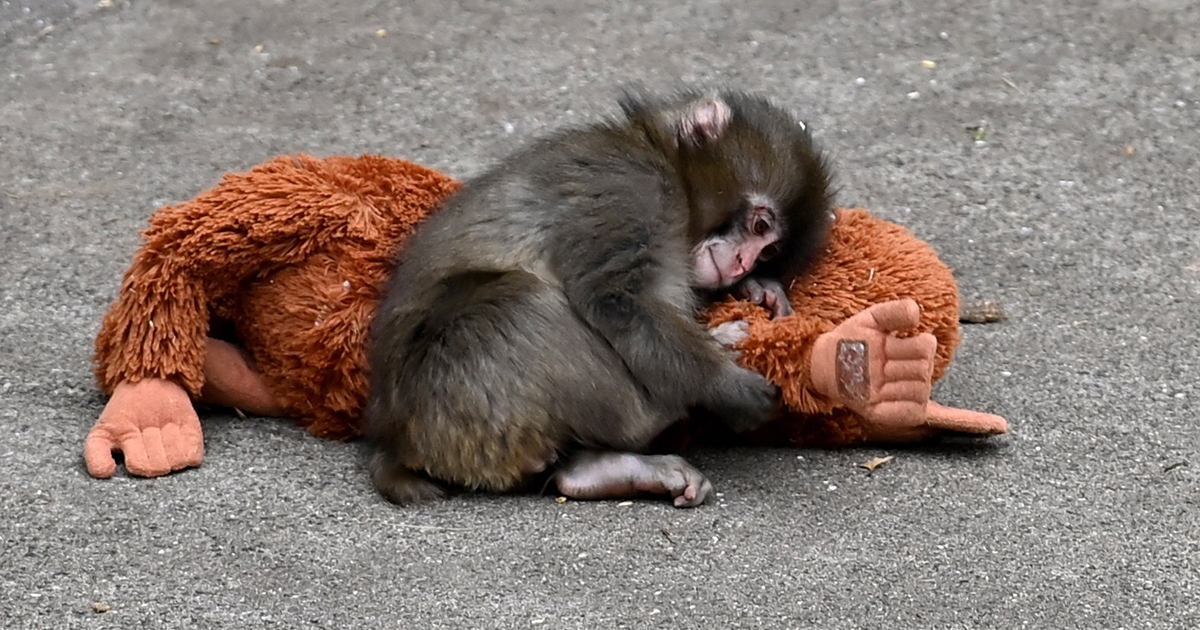
I can’t be the only one who got completely drawn into the story of Punch, the baby macaque who bonded with a stuffed toy after being abandoned by his mother.
Today, Punch continues to draw attention — especially as viewers follow his interactions with other macaques, which range from gentle to rough.
Now seven months old, experts in primate behavior are offering new insights into his heartbreaking story — including why he’s sometimes seen being “bullied” by other monkeys.
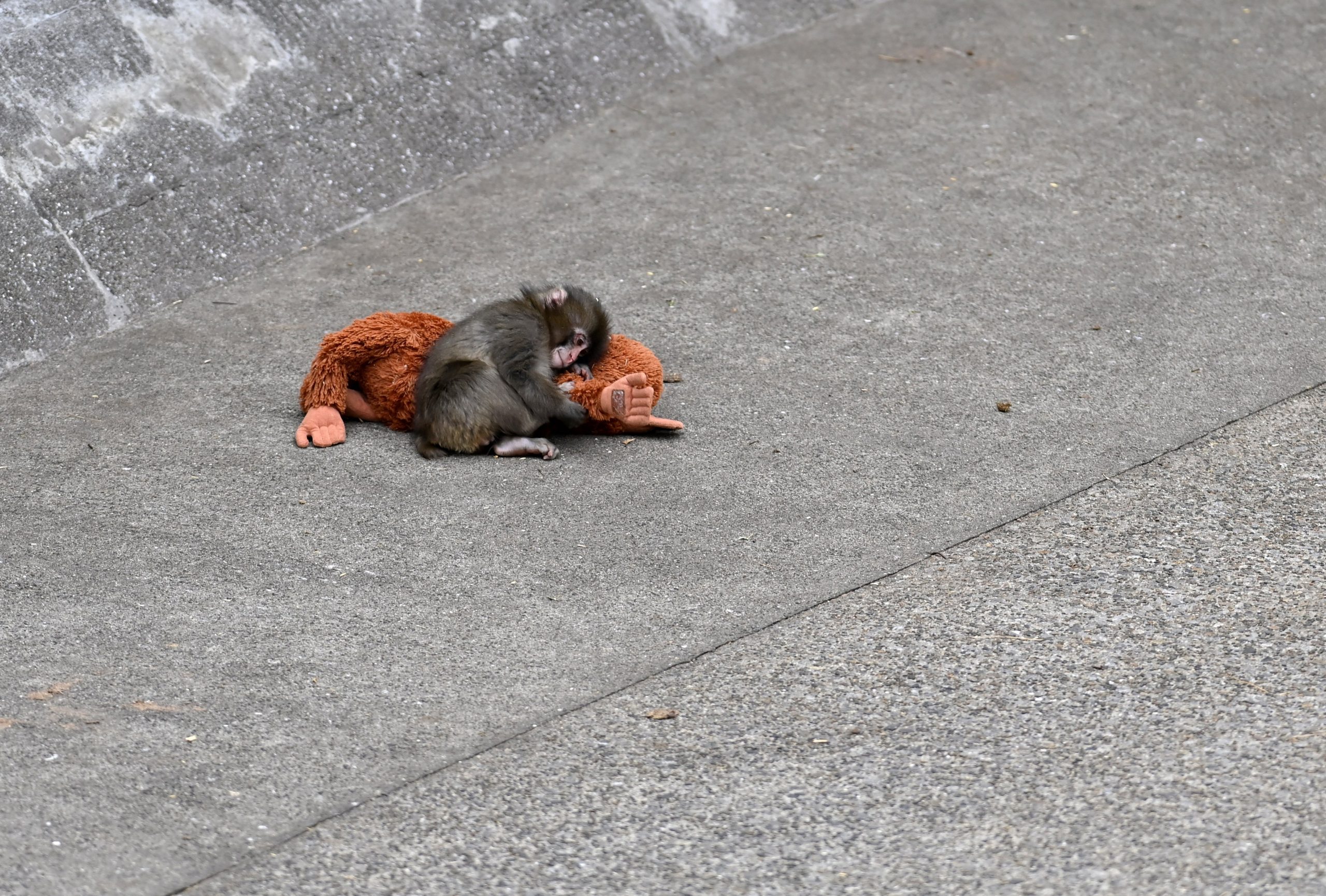
By now, many people have likely seen punch, the baby macaque whose story has captivated the internet. The young monkey went viral after being filmed carrying and cuddling a stuffed animal nearly as big as he is inside his enclosure at Ichikawa City Zoo, east of Tokyo.
Zookeepers later revealed that the Japanese macaque had been rejected by his mother shortly after birth, in last July. With no maternal care, the infant began clinging to the plush toy, which staff describe as a kind of “surrogate mother.”
The touching footage quickly spread online, driving a surge in zoo visitors and even inspiring a parody on Saturday Night Live.
Why was Punch rejected by his mom?
According to the zookeepers in Tokyo, Punch’s mother was a first-time parent and gave birth during an extreme heatwave, two factors that can significantly increase stress.
“There is evidence that maternal investment is affected by periods of environmental or nutritional stress, where mothers may not have sufficient resources to provide for their offspring,” Zanna Clay, a developmental psychologist specializing in primatology, told Bored Panda.
“Heatwaves can be one such example.”
Jessica Mayhew, who studies primate social behavior, added that maternal care in primates is largely learned.
“Being a parent is challenging even in the best of circumstances,” she explained.
“Maternal care in primates is learned over one’s lifetime and influenced by opportunities to observe experienced mothers.”
Mayhew noted that rejection is more common in captivity, particularly among first-time mothers. She also pointed out that Japanese macaques live in strict matrilineal hierarchies, meaning Punch’s mother’s low social rank may have contributed to the rejection.
Why did Punch bond with a stuffed animal?
Baby Japanese macaques instinctively cling to their mother’s body after birth to develop muscle strength and gain a sense of security. After Punch was abandoned, keepers provided several soft items, including towels and toys.
He consistently chose a plush orangutan, which he hugs, sleeps with, and runs back to when distressed.

About the Author