
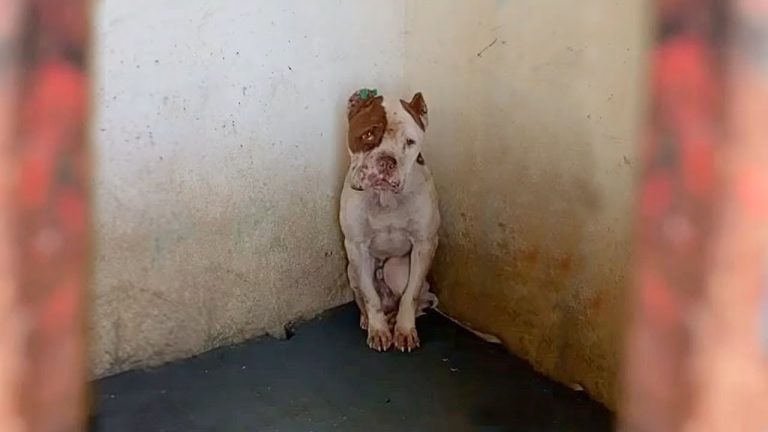
Ozgur’s story is one that lingers in the heart long after you hear it. It begins in a place no living being should ever have to endure—a dark, filthy room where he had been confined for nearly his entire life. When rescuers finally found him, he was barely holding on. His frail body, reduced to little more than skin stretched tightly over fragile bones, told the story of prolonged neglect. He had been left without proper food, medical care, or even the smallest measure of kindness.
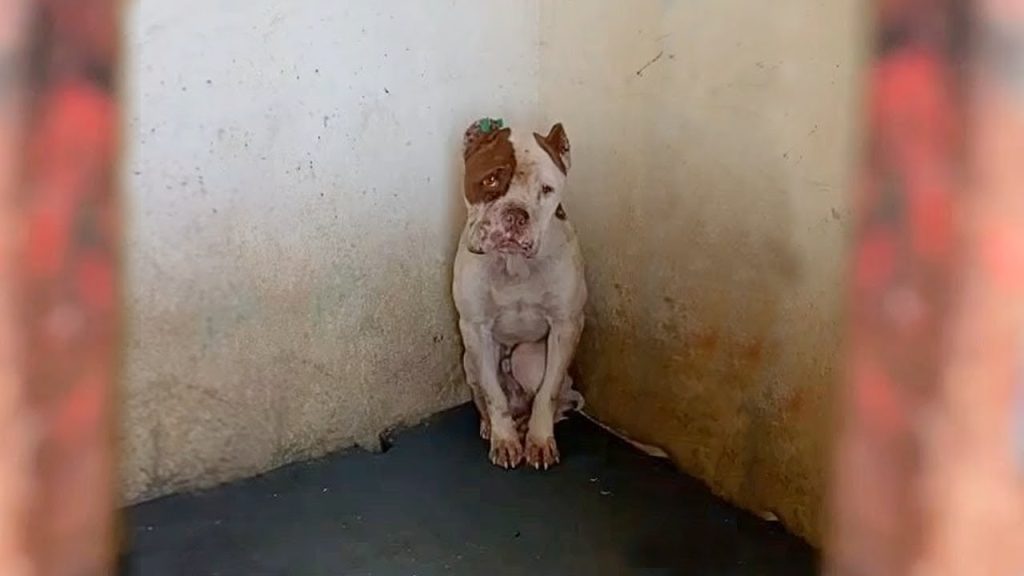
Severe malnutrition had taken a devastating toll. Every rib was sharply visible, each movement slow and painful. Deep wounds covered his body, many of them infected after being left untreated for far too long. The smell of infection hung in the air, a heartbreaking reminder of how long he had suffered alone. Yet perhaps the most painful sight of all was not the physical damage, but the emptiness in his eyes. Ozgur did not look angry. He did not even look frightened. He looked defeated, as though hope itself had quietly slipped away.
Rescuers moved quickly, understanding that time was not on his side. At the veterinary clinic, a team of doctors and caregivers began the careful and urgent work of saving his life. His wounds were gently cleaned, layers of dirt and infection slowly removed. It was painstaking work, requiring patience and extraordinary tenderness. Months of accumulated neglect could not be undone in a single day, but every small step forward mattered.
Intravenous fluids were administered to combat dehydration and stabilize his weakened system. High-dose antibiotics were introduced to fight the severe infections that threatened to overwhelm his fragile body. Because Ozgur was so dangerously underweight, the medical team created a specialized feeding plan. Rather than overwhelming his system with large meals, he was offered small portions at frequent intervals. This gradual approach helped his body accept nourishment without shock, allowing him to rebuild strength safely and steadily.
Throughout his treatment, what stood out most was the gentleness shown toward him. Caregivers spoke softly, moved slowly, and treated him not as a case, but as a soul who deserved dignity. For a dog who had likely never experienced consistent kindness, these quiet gestures were as powerful as any medicine. Healing is never only physical. Trust, once broken, requires time and compassion to restore.
As the days passed, subtle but meaningful changes began to appear. The sharp outline of his ribs softened slightly as he gained weight. Swelling around his wounds decreased, and healthy tissue began replacing infection. His coat, once dull and patchy, slowly showed signs of improvement. Scar tissue formed where open wounds had once been, visible reminders of what he had endured—but also of what he had survived.
More remarkable than the physical healing was the shift in Ozgur’s spirit. At first, he remained withdrawn, cautious of every touch and sound. Human hands had not brought him safety before. Yet patience has a language of its own. Gradually, he began to lift his head when someone entered the room. His eyes followed caregivers instead of staring blankly at the floor. Small moments of curiosity replaced the earlier emptiness.
When he was finally strong enough to leave the clinic, Ozgur was not returned to confinement. Instead, he was welcomed into a loving home where long-term care would continue. For the first time in his life, he had a soft bed of his own. He had clean water readily available. He had regular meals prepared with his fragile recovery in mind. Most importantly, he had people who saw him as family.
The transformation that followed was nothing short of extraordinary. In the safety of his new environment, Ozgur slowly began to rediscover what it meant to simply be a dog. He explored his surroundings with tentative steps at first, sniffing corners and learning that no punishment awaited him. Over time, those steps grew more confident.
His tail, once motionless, began to wag. At first it was subtle, a small movement that could have easily been missed. But soon it became unmistakable—a genuine expression of joy. He discovered toys and learned how to play. The simple act of chasing a ball or chewing on a soft toy became a celebration of life itself. His once-clouded eyes now sparkled with curiosity and happiness.
Neighbors and visitors who met Ozgur could hardly believe he was the same dog who had been rescued from such dire conditions. His body filled out with healthy weight. His coat regained a natural sheen. The scars remained, quiet markers of resilience rather than weakness. And his personality blossomed. He became affectionate, energetic, and deeply bonded to the people who had stood by him.
Ozgur’s journey is not only about survival. It is about restoration. It reminds us that even when neglect leaves visible damage, compassion can rebuild what cruelty tried to destroy. His recovery required skilled veterinary care, careful nutritional planning, and consistent medical oversight. But just as essential were patience, gentleness, and unwavering commitment.
For many who hear his story, especially those who have witnessed hardship in their own lives, Ozgur represents something larger than one rescued dog. He stands as proof that broken beginnings do not have to define the rest of a life. Healing may come slowly. Trust may take time to return. But with steady care and genuine love, even the deepest wounds can close.
Today, Ozgur lives not as a victim of his past, but as a joyful companion who embraces each day. He greets the morning with energy. He plays without fear. He rests peacefully, knowing he is safe. His transformation is a testament to resilience and to the extraordinary difference that compassion can make.
In a world where stories of neglect can feel overwhelming, Ozgur’s life offers hope. It assures us that kindness is not small. It changes outcomes. It rewrites futures. And sometimes, it saves a life that once seemed beyond saving.
