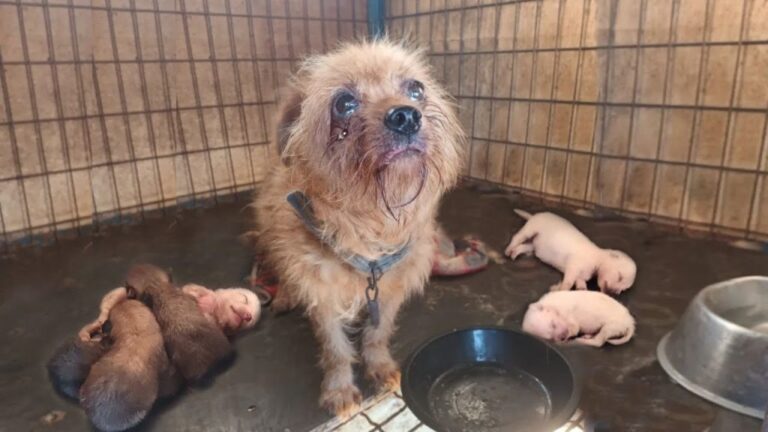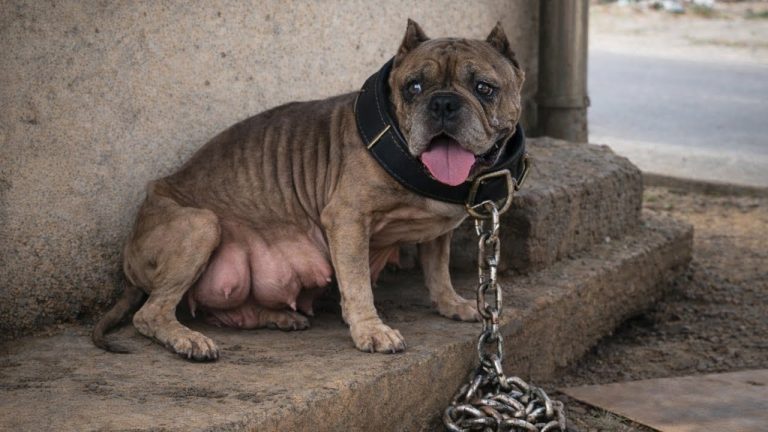
Budam’s story is one that quietly exposes a form of suffering that often remains hidden behind closed doors. For years, her life was defined not by companionship or care, but by constant exploitation. She was treated as a tool rather than a living being, valued only for her ability to produce puppies. Her body was pushed beyond its limits, with no regard for her comfort, her health, or her spirit. When age and illness finally caught up with her, the usefulness others assigned to her disappeared, and so did any sense of responsibility toward her wellbeing.
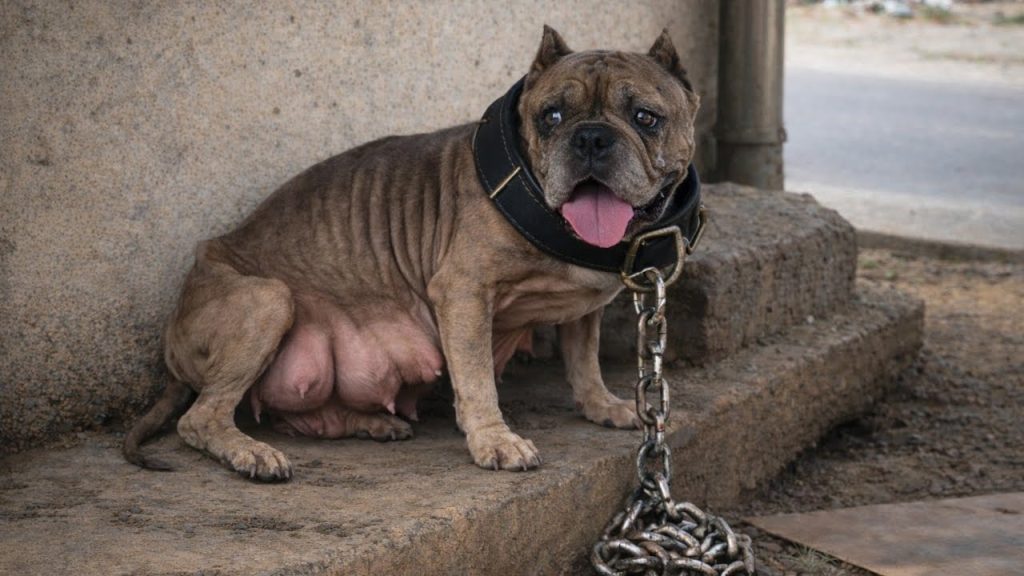
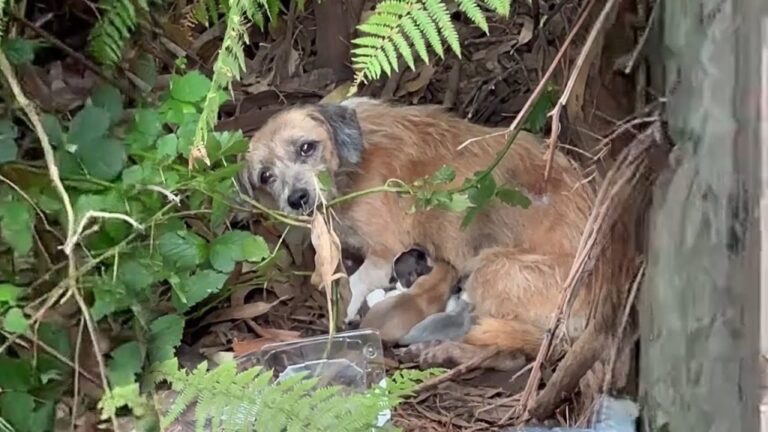
Once she could no longer give what was demanded of her, Budam was discarded without hesitation. She was left alone in a crumbling shack, isolated from the world, without proper food, clean water, or medical care. Days blurred into weeks as her strength faded. Hunger gnawed at her body, dehydration weakened her further, and sickness settled in without relief. The loneliness she endured was just as painful as the physical neglect. In that abandoned space, she waited, not knowing whether anyone would ever come for her.
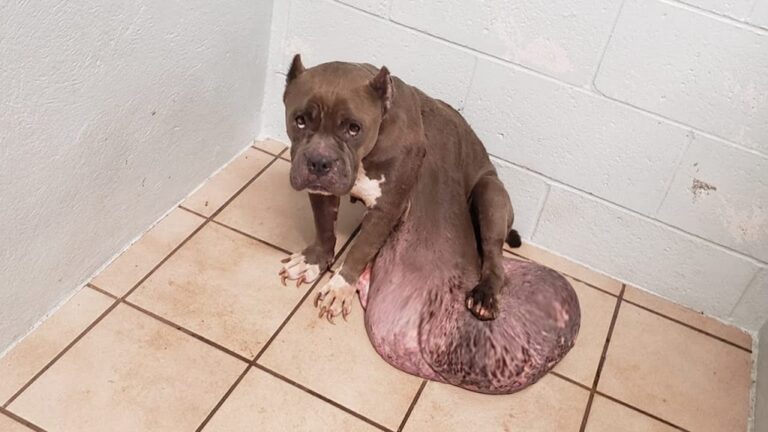
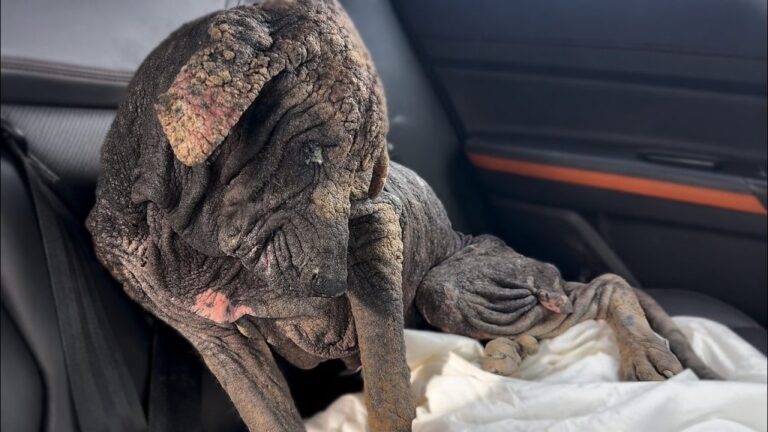
When rescuers finally found Budam, they were confronted with a sight that was difficult to forget. She was frail, exhausted, and clearly in distress, her body bearing the heavy cost of years of mistreatment. They moved quickly, understanding that time was not on her side. At the hospital, veterinarians worked to assess her condition, and the results were devastating. Budam was diagnosed with stomach cancer, a serious and aggressive illness, along with severe infections in her eyes that caused constant pain and discomfort. Her small body was struggling on multiple fronts at once.
The medical team was honest about the risks. Budam was weak, undernourished, and battling advanced disease. Surgery, while offering a chance at relief, carried enormous danger. The odds were stacked against her, and survival was far from guaranteed. Many would have considered it kinder to let her go quietly. Yet the people who stepped into her life at that moment refused to see her as a lost cause. They believed that after everything she had endured, Budam deserved a chance, however small, to experience dignity and care.
Before any operation could be attempted, Budam needed strength. An intensive nutrition plan was put in place to help her fragile body rebuild. She was fed carefully prepared meals, rich in nutrients but gentle enough for her condition. Just as important as the food was the emotional support she received. She was spoken to softly, touched with kindness, and treated with patience. For perhaps the first time in her life, Budam was not being used for anything. She was simply being cared for.
Slowly, subtle changes began to appear. Her eyes, once dull with exhaustion, started to show moments of awareness. She responded to gentle voices and leaned into comforting hands. Each small improvement became a source of hope for everyone around her. When the time finally came, the decision was made to proceed with surgery. It was a moment filled with anxiety, but also with determination. Budam had fought so hard just to reach this point.
Against expectations, the surgery was successful. The dangerous procedure that once seemed almost impossible ended with Budam still breathing, still holding on. Recovery was not instant, and it was not easy, but it was real. Day by day, her strength returned. She began to eat with more interest, to move with a little more confidence, and to rest without constant pain. The dog who had once been abandoned was now surrounded by people who watched over her every need.
As her health improved, something deeper also changed. Budam began to experience life beyond survival. She felt warmth, both physical and emotional, in a home where she was welcomed rather than ignored. Gentle routines replaced chaos, and affection replaced fear. She learned what it meant to be part of a family, to be seen as more than a body or a burden. These moments, though they came late in her life, carried immense meaning.
Budam’s time after her recovery was not defined by how long she lived, but by how she lived. She knew comfort, safety, and love. She was held, spoken to kindly, and treated with respect until the very end. When she eventually passed away, she did so not in loneliness or neglect, but in peace. Her final chapter was one of care and compassion.
Her story stands as a quiet reminder that even lives marked by suffering can still be touched by kindness. Budam did not have many years of happiness, but she had enough to know she mattered. And for those who loved her, that knowledge was everything.

About the Author