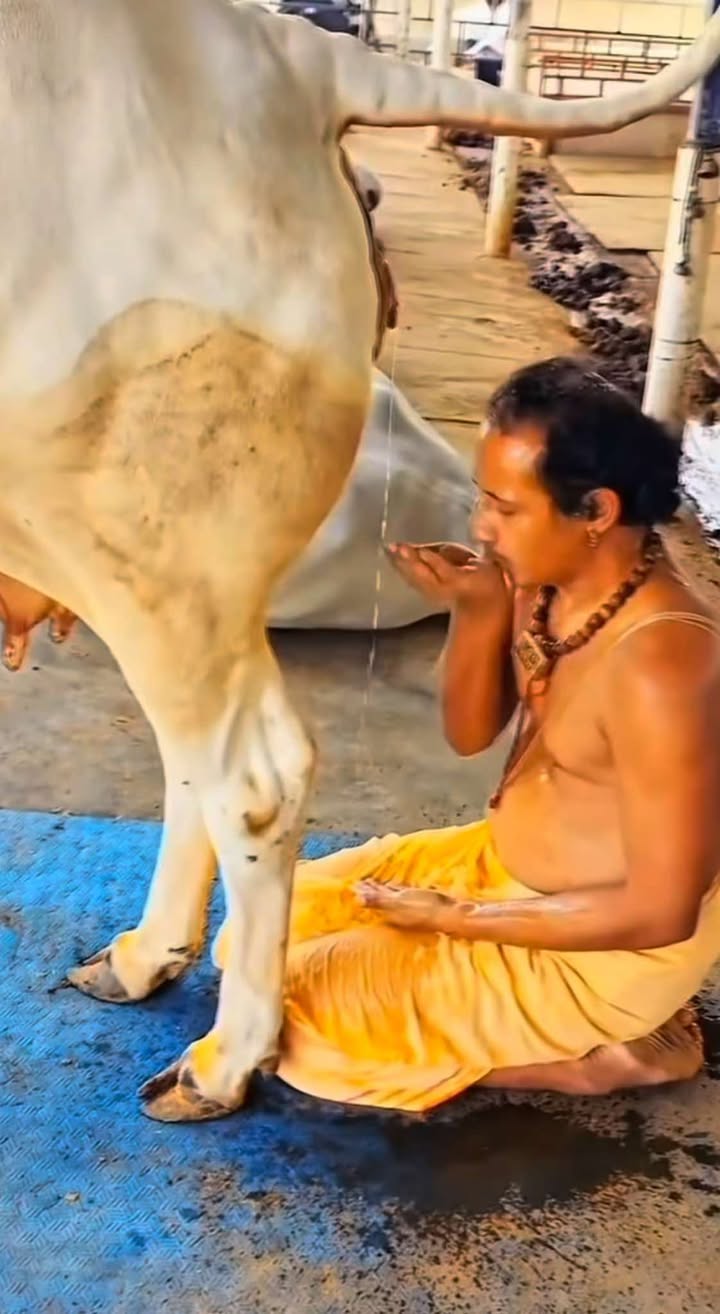
🐄 Cows in Hindu Culture and Belief
In India, the cow is considered one of the most sacred animals and is deeply respected in religion and culture. Known as “Gau Mata” (Mother Cow), it symbolizes life, compassion, fertility, and universal motherhood.
🌿 Historical Roots
The worship of cows dates back to the ancient Vedic period (over 3,000 years ago). Sacred texts like the Rigveda describe the cow as a divine gift that provides life, nourishment, and prosperity.
Cows are also associated with several deities:
- Krishna, often depicted playing his flute among cows
- Shiva, whose sacred bull is Nandi
- Devi, portrayed as the mother of all living beings
🕉️ Why Cows Are Sacred
In Hindu tradition, cows are not considered gods, but symbols of life and generosity — they give milk, butter, fuel (dung), and require very little in return.
Killing cows is forbidden in many parts of India and is considered a serious sin.
💧 Use of Cow Products in Rituals
Hindus use several cow-derived products in rituals, collectively called Panchagavya (“five cow products”):
- Milk 🥛
- Ghee (clarified butter)
- Curd
- Cow urine (gomutra) 💧
- Cow dung 💩
These are used in purification rituals, religious ceremonies, and traditional medicine (Ayurveda).
- Cow urine is believed by some to have cleansing and healing properties, and in rare cases, people apply it to their bodies for ritual purposes.
- Cow dung is used for ritual cleansing and as a disinfectant in homes and temples.
🌺 Deeper Symbolism
At its core, the cow represents life, compassion, and respect for nature.
By protecting and honoring cows, believers express a worldview where all life is sacred, and humans live in harmony with other living beings.

About the Author