

At a crowded local event farm, amid the noise and movement of a busy day, a small stray dog named Pepê stood trembling on the sidelines. He wasn’t part of the celebration. He wasn’t anyone’s beloved companion. Instead, he had become something far less dignified—an object of amusement. Children chased him, poked at him, and treated him as though he were a toy left behind in the grass. By the time help arrived, Pepê was exhausted in every possible way.
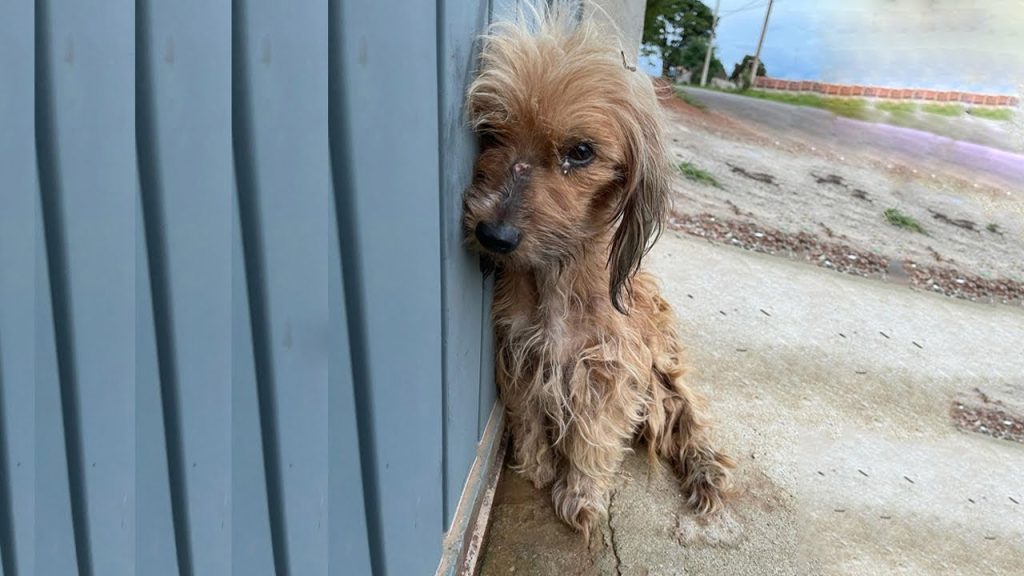
Fear had settled deep into his bones. When anyone tried to approach, he flinched and pulled back, eyes wide with panic. Human hands, which should have meant comfort, only reminded him of stress and confusion. He had learned to expect noise instead of gentleness, chaos instead of kindness. It was clear that this little dog had not known safety for a very long time.
Esdras, the rescuer who found him, immediately sensed that this would not be a simple task. Pepê did not rush forward for help. He did not wag his tail or show even a hint of trust. Instead, he stood frozen, unsure whether the stranger coming toward him would bring more distress. Rather than forcing the situation, Esdras chose patience. He lowered his voice, softened his movements, and allowed time to do its quiet work.
Building trust with a frightened animal requires restraint and empathy. Esdras spoke gently, inching closer little by little. Each small step forward was met with hesitation from Pepê, but there was no pressure, no sudden grab. The approach was slow and deliberate, honoring the dog’s boundaries. Eventually, after many careful moments, Esdras was able to reach out and offer a tentative, reassuring touch.
What he felt beneath Pepê’s tangled, matted fur was heartbreaking. The dog was painfully thin, his ribs clearly visible under his fragile frame. Heavy rainstorms had recently swept through the area, and without shelter, Pepê had endured them alone. Cold nights and damp days had drained whatever strength he had left. Survival had taken everything out of him.
As Esdras continued to stroke him gently, something remarkable happened. Pepê, who had been rigid with fear just moments before, slowly relaxed. His body softened under the steady rhythm of kind hands. At one point, overwhelmed by exhaustion and perhaps by the unfamiliar feeling of safety, the little dog fell asleep while being petted. It was not dramatic or loud. It was simply the quiet surrender of a soul that had been running on empty for far too long.
Securing him with a leash was another delicate step. For a dog who had associated human contact with discomfort, even this could have triggered panic. Yet by then, a fragile thread of trust had begun to form. Pepê allowed himself to be guided away from the chaos of the farm and toward something better.
Back in a safe environment, the transformation began in earnest. First came a warm bath. The dirt and grime that had clung to him washed away, revealing the true color of his coat beneath the mats. Water that might once have frightened him now seemed to soothe him. Each careful movement signaled a new chapter—one where he was handled with care, not roughness.
Then came food. A proper meal placed gently before him was more than nourishment; it was reassurance. He did not have to search through scraps or guard himself against competition. The bowl was his, and it was filled with intention. Slowly, cautiously, he began to eat.
With every passing moment, Pepê’s eyes changed. The sharp edge of fear began to soften. There was still uncertainty, of course, but there was also something new—a flicker of hope. He was no longer standing alone on the edge of a loud gathering, bracing himself for the next unwelcome touch. He was in a place where hands meant safety.
Watching his journey unfold is a powerful reminder of how easily animals can be misunderstood and mistreated, even unintentionally. What may seem like harmless play to a child can feel overwhelming to a vulnerable creature already struggling to survive. Pepê was not a toy. He was a living being, worn down by exposure and neglect, doing his best to endure.
His story is not just about rescue. It is about dignity restored. It is about the profound difference that patience can make. Esdras did not rush the process. He did not demand immediate affection. He met Pepê where he was—frightened, exhausted, and wary—and offered consistency instead of pressure.
By the end of his rescue, Pepê was no longer the “broken toy” left behind at the edge of someone else’s event. He was a cherished companion, bathed, fed, and finally able to rest without fear. The change did not happen because of dramatic gestures. It happened because one person chose kindness over indifference.
For many of us, especially those who have shared our lives with animals, stories like Pepê’s resonate deeply. They remind us that love is not loud. It is steady. It shows up softly and waits until trust has room to grow.
Pepê’s journey from terror to tenderness is proof that even the most frightened heart can heal when met with patience. In a world that often moves too quickly, his rescue stands as a quiet testament to what compassion can accomplish—one gentle touch at a time.
