
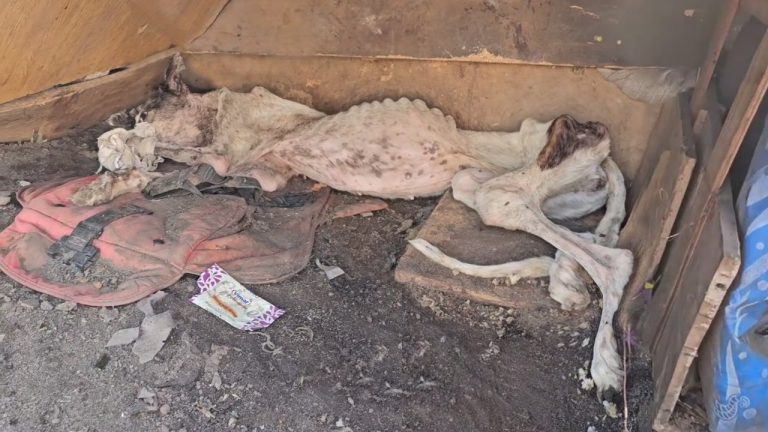
Blanca was found collapsed in a quiet backyard, her frail body stretched out against the cold ground, as if she had simply run out of strength. She wasn’t barking. She wasn’t moving. She was barely breathing. What should have been the powerful frame of a Pitbull was reduced to skin pulled tightly over fragile bones, a heartbreaking picture of exhaustion and neglect.
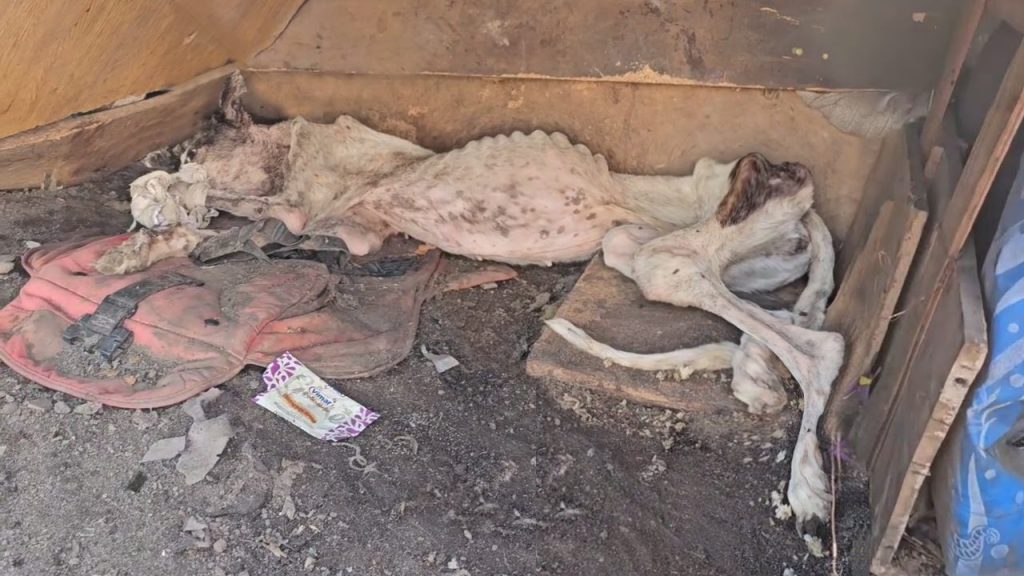
When rescuers first approached her, they realized just how critical her condition had become. Blanca was severely emaciated, her ribs sharply visible beneath thinning fur. Every breath looked like effort. Even more devastating was the injury to her hind leg. It hung at an unnatural angle, infected and painfully swollen, making it impossible for her to stand or walk. She had likely been lying there for days, unable to move, waiting for help that may never have come.
Despite the fear and discomfort she must have felt, Blanca did not react with aggression. Instead, she remained quiet and surprisingly gentle as strangers knelt beside her. There was a softness in her eyes—a silent plea, perhaps, but also a trace of trust. For a dog in such distress, that quiet cooperation spoke volumes about her spirit.
The rescue team wasted no time. Blanca was carefully lifted onto a stretcher and rushed to receive urgent medical care. At the clinic, veterinarians quickly assessed the extent of her suffering. She was dangerously dehydrated and profoundly malnourished. Her body had been surviving on almost nothing. The injury to her hind leg had become severely infected, adding immense strain to an already weakened system.
Treatment began immediately. Fluids were administered to address the dehydration. Gentle nutritional support was introduced to avoid overwhelming her fragile body. The infected leg was cleaned and treated with antibiotics to stop the spread of infection. Every step had to be measured and cautious. A dog in Blanca’s condition could not simply bounce back overnight; her recovery would demand patience, expertise, and steady compassion.
Through it all, Blanca continued to show remarkable composure. Veterinary staff described her as cooperative and calm, even during procedures that must have caused discomfort. She allowed hands to examine her wounds. She accepted food offered carefully from a bowl. She seemed to understand, in her own way, that she was finally safe.
The first days were critical. Rehydrating her system required close monitoring. Too much too quickly could cause complications; too little would leave her weak. Slowly, her body began to respond. Her eyes, once dull with fatigue, started to regain clarity. Her breathing became steadier. Though she still could not stand, there were small signs that her will to live was returning.
Nutrition played a central role in Blanca’s healing. Carefully balanced meals were introduced in gradual portions, allowing her digestive system to adapt. With each passing day, she gained a little strength. Muscle tone began to rebuild around her fragile frame. The sharp outlines of her ribs softened as healthy weight returned. The transformation was not instant, but it was steady and undeniable.
Physical therapy became the next crucial chapter. The injury to her hind leg required consistent rehabilitation to restore movement and rebuild strength. Therapists worked patiently with her, guiding gentle exercises designed to increase flexibility and encourage circulation. At first, even shifting her weight seemed like a monumental task. But Blanca did not give up. With support under her belly and careful encouragement, she began to test her balance.
One of the most moving moments in her journey came when she attempted to stand. It wasn’t graceful. It wasn’t steady. But it was progress. For a dog who had been unable to move, even a few seconds upright marked a powerful turning point. Each day afterward brought incremental improvements—longer standing periods, tentative steps, and eventually short walks with assistance.
Weeks of intensive care slowly reshaped Blanca’s body and spirit. Her coat grew shinier as nutrition restored her health. The infection subsided under proper medical treatment. Strength returned to her hind leg through therapy and time. The dog who had once lain motionless in a backyard began to show glimpses of energy and curiosity.
More than the physical changes, it was her renewed spark that left a lasting impression. Blanca began greeting caregivers with a gentle wag of her tail. She showed interest in toys. She lifted her head eagerly when familiar voices entered the room. The quiet resignation that once defined her expression was replaced by alertness and warmth.
By the end of her recovery journey, Blanca was nearly unrecognizable from the fragile animal first found collapsed. Healthy weight had returned to her frame. She could walk independently. Her eyes, once clouded with exhaustion, now reflected vitality and trust. The strength that defines her breed was finally visible—not just in muscle, but in resilience.
Blanca’s story is not simply about medical intervention. It is about the extraordinary capacity for healing when love and care meet suffering with patience. It is a reminder that even when a life appears broken beyond repair, hope can still take root. Her transformation stands as living proof that compassion is not a small act; it can be the turning point between despair and renewal.
For those who have ever wondered whether their kindness truly matters, Blanca offers a clear answer. Sometimes, the gentlest touch and the willingness to act are all it takes to bring a fading spirit back to life.
