
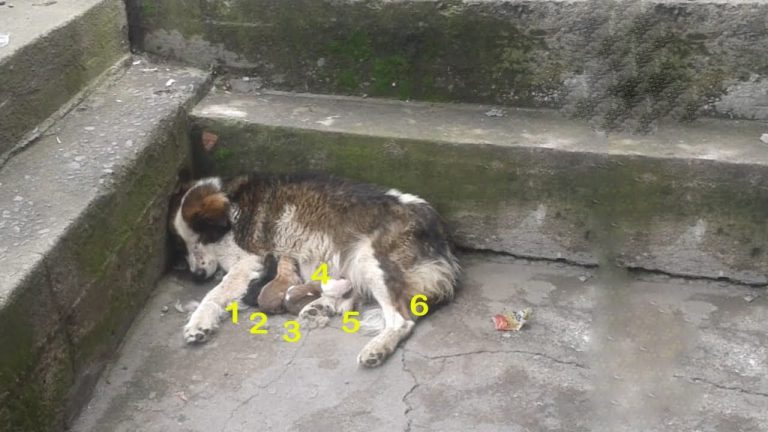
Azucena’s story begins on a crowded city sidewalk, beneath a sky that was quickly darkening with the threat of an approaching storm. Abandoned and alone, she found herself in active labor with nowhere safe to go. Her body, exhausted and trembling, simply could not carry her any farther. With cars rushing past and strangers hurrying by, she did the only thing she could do—she lay down on the cold pavement and brought her puppies into the world right there in the open.
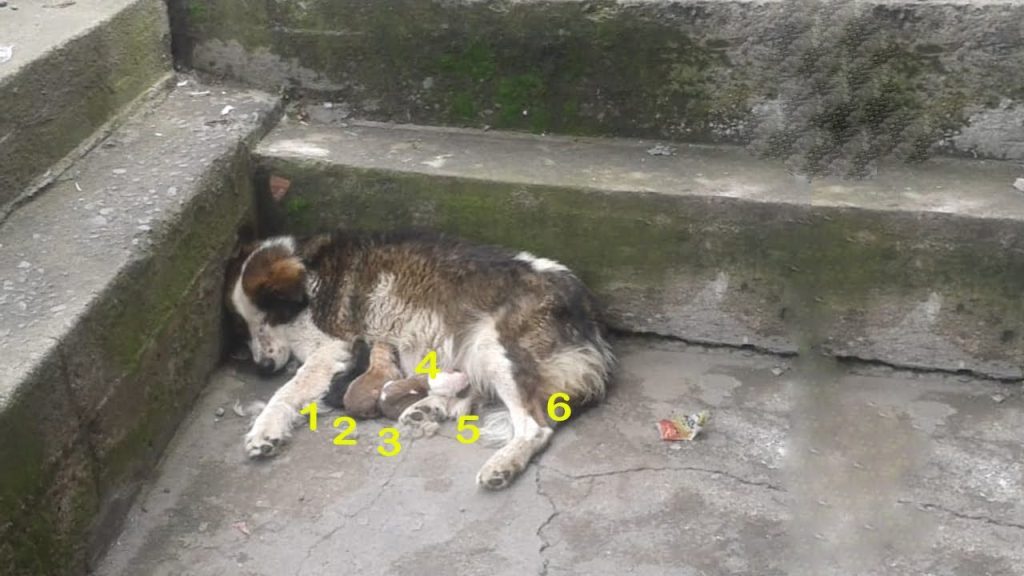
It is difficult to imagine the fear she must have felt in those moments. A mother’s instinct to protect is powerful in any species, and Azucena was no different. Each contraction came with vulnerability, and yet she had to remain alert, watching every movement around her. The sidewalk was no place for newborn life, but it was all she had. As the wind began to pick up and the air grew heavy with rain, she curled her body around her tiny puppies, shielding them as best she could from the noise, the cold, and the uncertainty.
People passed by. Some glanced in her direction. Others avoided eye contact entirely. In a world where everyone seems to be rushing somewhere, it is painfully easy to overlook suffering that doesn’t directly touch us. Azucena, weak but determined, continued to give birth, one fragile life at a time. Six puppies arrived, each one small, blind, and utterly dependent on her.
When the rescue team finally reached her, they were met not with gratitude, but with caution—and rightfully so. Azucena was deeply protective. Her eyes were wide with anxiety, and her body formed a tight barrier around her newborns. She had already been abandoned once; she had no reason to trust unfamiliar hands reaching toward her family. For a mother who had been left to endure such hardship alone, every stranger represented a potential threat.
The rescuers understood this. Instead of forcing the situation, they chose patience. They spoke softly. They moved slowly. They allowed Azucena to see that they meant no harm. Compassion, when offered consistently and without pressure, has a way of breaking down even the highest walls. Little by little, her tense posture began to soften. Her eyes, once sharp with fear, grew less frantic. She realized that these people were not there to take from her—but to help her.
Gently, the team secured Azucena and her six puppies, ensuring that each newborn was kept warm and close to their mother. The storm that had threatened them only hours earlier now seemed symbolic of the chaos she had endured. But for the first time since being abandoned, Azucena was no longer alone in facing it.
The next challenge, however, came quickly. The local shelter was already at capacity. Resources were stretched thin, and space was limited. Turning away a mother and six newborns was unthinkable, yet the reality of overcrowded shelters is one faced by communities everywhere. Without immediate placement, their safety could once again be uncertain.
An urgent call went out for a foster home willing to take in not just Azucena, but her entire litter together. Separating a nursing mother from her babies would only add further stress and trauma. The plea reached compassionate hearts in the community, and fortunately, one family responded with remarkable generosity. They didn’t offer to take just a puppy or two—they opened their home to all seven lives.
For Azucena, the transition must have felt surreal. Instead of concrete beneath her body, there was warmth. Instead of constant noise and passing strangers, there was calm. Her puppies were able to nurse peacefully, their tiny bodies growing stronger each day. No longer forced to remain hyper-vigilant, she could finally rest.
Trust does not return overnight, especially after betrayal. Yet in the steady rhythm of a safe home—regular meals, gentle voices, soft bedding—Azucena began to change. Her posture relaxed. Her tail, once tucked tightly beneath her, began to wag. The anxious tension that had defined her early rescue days gradually gave way to quiet contentment.
The puppies, blissfully unaware of how close they had come to starting life without protection, thrived. They tumbled over one another, discovered their voices, and explored their new surroundings with innocent curiosity. Watching them grow was a testament to resilience—not only theirs, but their mother’s.
Ultimately, the family who fostered them chose to make their commitment permanent. Azucena and her six puppies were adopted together, ensuring that the bond forged under such difficult circumstances would not be broken. What began as an act of emergency compassion became a lifelong promise.
Today, Azucena lives what can only be described as her best life. She moves through her home with confidence, no longer scanning for danger. She enjoys simple pleasures—sunlight through a window, a soft place to rest, the reassuring presence of those who care for her. Her eyes, once filled with fear, now reflect peace.
Her story serves as a powerful reminder that abandonment does not have to define a life. Even in moments of profound vulnerability, hope can arrive. It may not come immediately, and it may require patience and persistence, but it can come.
For those who have loved and cared for animals throughout their lives, Azucena’s journey resonates deeply. It speaks to the unwavering devotion of a mother, the transformative power of kindness, and the extraordinary difference one compassionate decision can make. A stormy sidewalk could have been the beginning and end of her story. Instead, it became the turning point.
In a world that often moves too quickly to notice quiet suffering, her rescue reminds us to pause, to look closer, and to act when we can. Because sometimes, saving one life doesn’t just change that life—it restores faith in humanity itself.
