
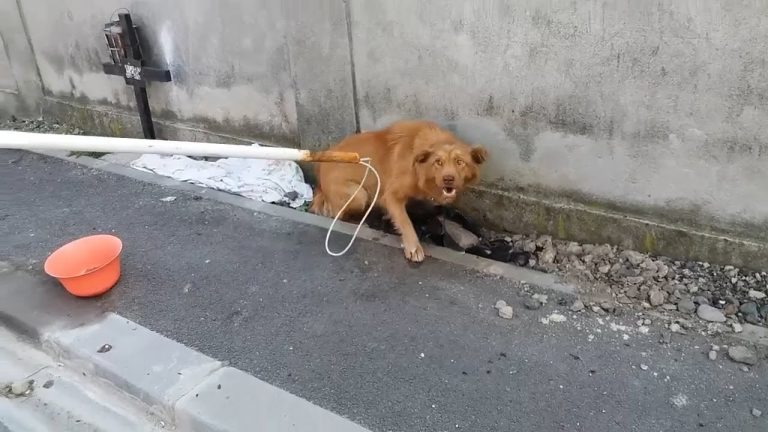
A quiet street shimmered beneath oppressive summer heat when rescuers first noticed her—a weary mother dog curled protectively around her five newborn puppies. The pavement radiated warmth, the air felt heavy and unmoving, and there was no shade except the fragile shelter of her own thin body. She had given birth not long before, and yet instead of resting in safety, she was fighting to keep her babies alive in conditions no living creature should have to endure.
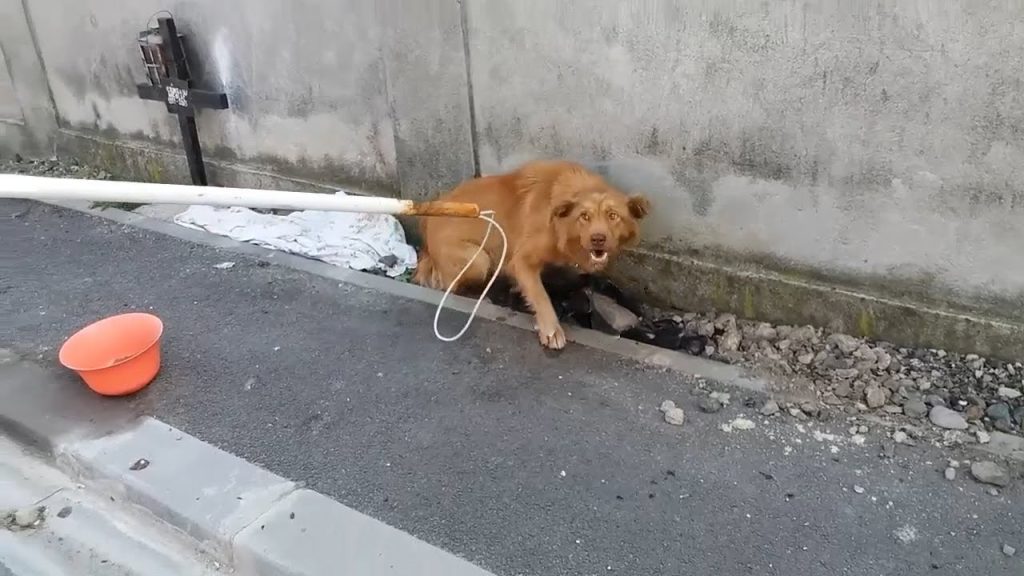
Her ribs showed through her dusty coat. Her eyes were sharp with exhaustion and fierce devotion. Anyone who stepped too close was met with a low, trembling growl. When the rescue team approached, she reacted exactly as a frightened mother would—placing herself between her puppies and what she perceived as danger. She barked, lunged, and snapped at the air, not out of aggression, but out of desperation. It was clear she had likely endured harassment before. Life on the streets had taught her one lesson above all else: trust no one.
For the rescuers, this was not simply a matter of lifting a box and driving away. It became a careful, delicate operation that demanded patience, empathy, and restraint. They understood that forcing the situation could traumatize her further or cause the puppies unnecessary distress. So they slowed down. They softened their voices. They kept their movements measured and nonthreatening. They offered water. They sat at a respectful distance. They waited.
Hour after hour passed under the relentless sun. The mother dog remained vigilant, her body tense, her gaze never leaving the strangers nearby. Yet even as she guarded her babies, her strength was fading. Caring for five newborns in extreme heat without proper nutrition or shelter was taking its toll. The rescuers knew time was not on anyone’s side. Still, they refused to rush. Compassion guided every decision.
Gradually, something shifted. The team’s quiet consistency began to chip away at her fear. They did not corner her. They did not raise their voices. They allowed her to observe them. Trust, especially after hardship, is built in moments that cannot be forced. It must be earned.
After more than six long hours of careful effort, a breakthrough finally came. With calm coordination, the rescuers were able to secure each puppy safely, placing them gently into a carrier. The mother, though still wary, sensed that her babies were not being harmed. When she was finally guided into safety as well, there was no chaos—only relief. It was as though she understood, on some quiet instinctive level, that the fight was over.
The journey to the shelter marked the end of one chapter and the beginning of another. Inside a cool, clean space, away from the scorching pavement and unpredictable threats of the street, the small family began to settle. The mother dog no longer needed to bare her teeth to survive. There was fresh water. There was nourishing food. There was soft bedding. For the first time in a long while, she could exhale.
In the days that followed, her transformation was remarkable. Without the constant stress of defending her puppies, her posture softened. Her eyes, once hardened by vigilance, grew gentler. She allowed caretakers to approach more closely. The same dog who had once lunged in fear now accepted gentle touch. The change was not instant, but it was undeniable. Safety has a way of restoring what hardship tries to erase.
And the puppies—those tiny, fragile lives that had begun under such harsh conditions—started to flourish. In a climate-controlled environment with steady meals and medical oversight, they grew stronger by the day. Their movements became steadier. Their small tails wagged with innocent curiosity. They explored their surroundings without fear.
Watching them thrive was a powerful reminder of what stability can do. They were never “stray” by nature. They were simply victims of circumstance. Given protection and care, they blossomed into the playful, bright little beings they were always meant to be. Many who witnessed their journey described them as little angels, not because of sentimentality, but because their resilience felt nothing short of miraculous.
For audiences, especially those who have spent decades witnessing both the beauty and the hardship of life, this story resonates deeply. It speaks to the quiet strength of motherhood—the instinct to protect at all costs. It reminds us that fear often masks vulnerability. It shows that patience and compassion can succeed where force fails.
The rescue also highlights an important truth about community responsibility. Stray animals do not choose their circumstances. They rely, often silently, on the kindness of strangers willing to intervene. The team’s willingness to spend more than six hours earning one frightened mother’s trust demonstrates what ethical rescue truly looks like. It is not dramatic or rushed. It is steady, humane, and rooted in respect for the animal’s emotional state.
In a world that can sometimes feel hurried and divided, moments like these restore faith. They show that goodness still exists in practical, hands-on ways. A bottle of water offered under the sun. A calm voice instead of a raised one. A team willing to sit on hot pavement until fear gives way to trust.
Today, that mother dog rests without scanning every shadow. Her puppies continue to grow in safety, surrounded by people committed to their well-being. Their story does not erase the hardship they endured, but it transforms it into something meaningful. It becomes proof that compassion changes outcomes.
For those watching from home—perhaps remembering their own beloved pets, or reflecting on the many seasons of life they have walked through—this rescue offers more than relief. It offers reassurance. Even in difficult circumstances, care can prevail. Even when trust has been broken before, it can be rebuilt.
Five small lives and one devoted mother were given a second chance—not through force, but through patience and empathy. And sometimes, that is the quiet miracle that matters most.
