
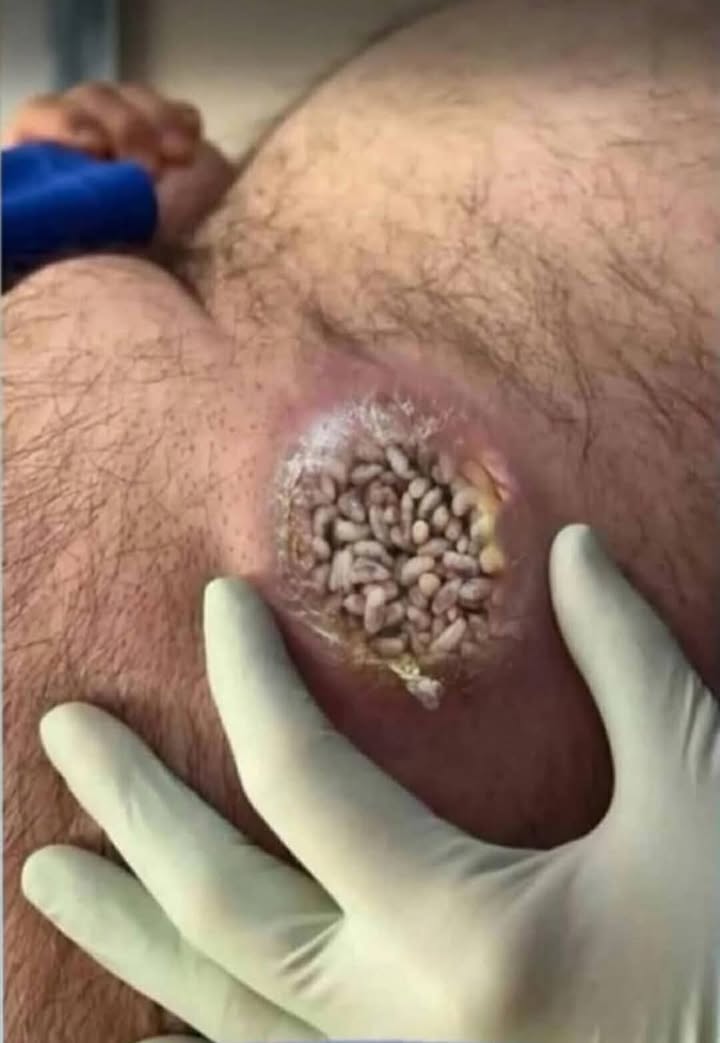
Parasitic worms (helminths) are among the most common infections worldwide, especially in areas with poor sanitation, contaminated water, or undercooked food. Over 1.5 billion people – about 1 in 5 humans on Earth – are currently infected with at least one type of parasitic worm.
Here is a clear, medically accurate overview of the most important worms that can live in the human body, how they get in, symptoms, diagnosis, and treatment.
1. Roundworms (Nematodes)
The most common group.
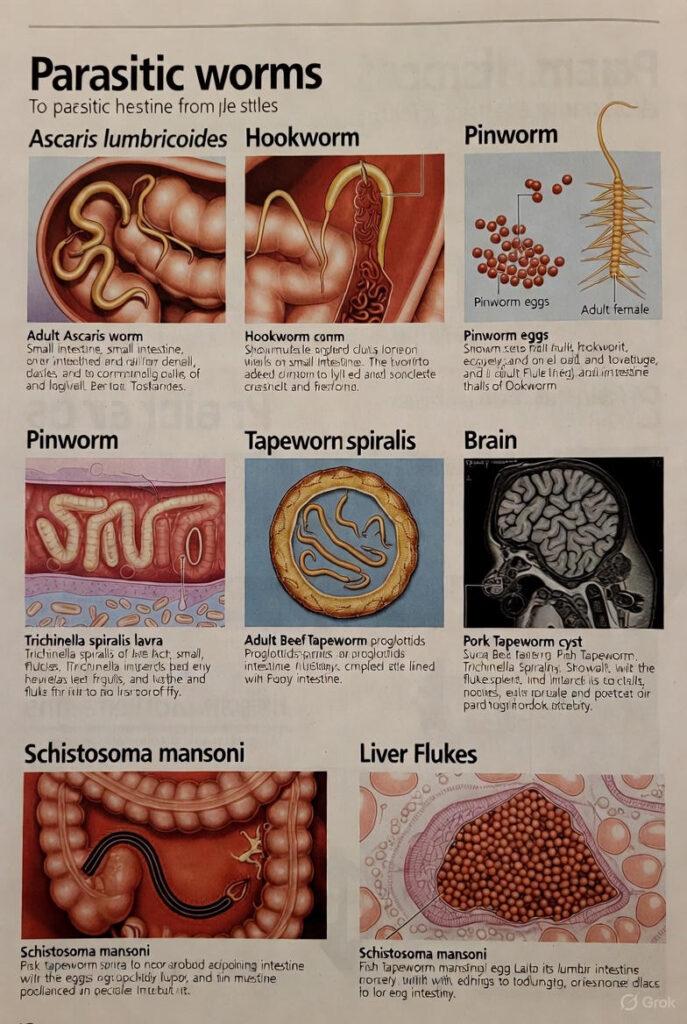
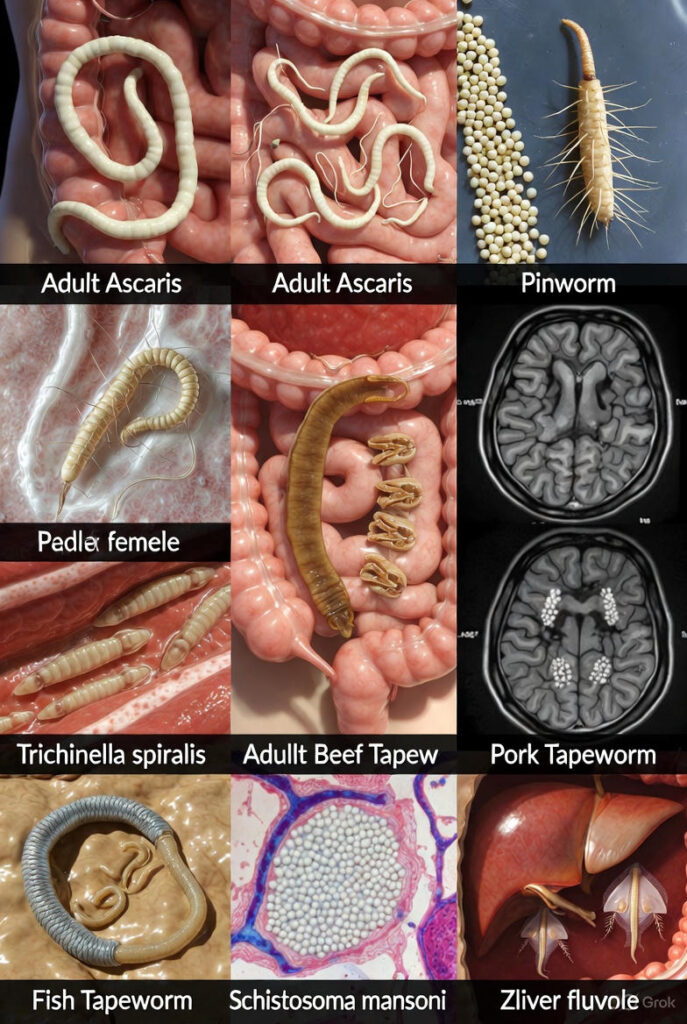
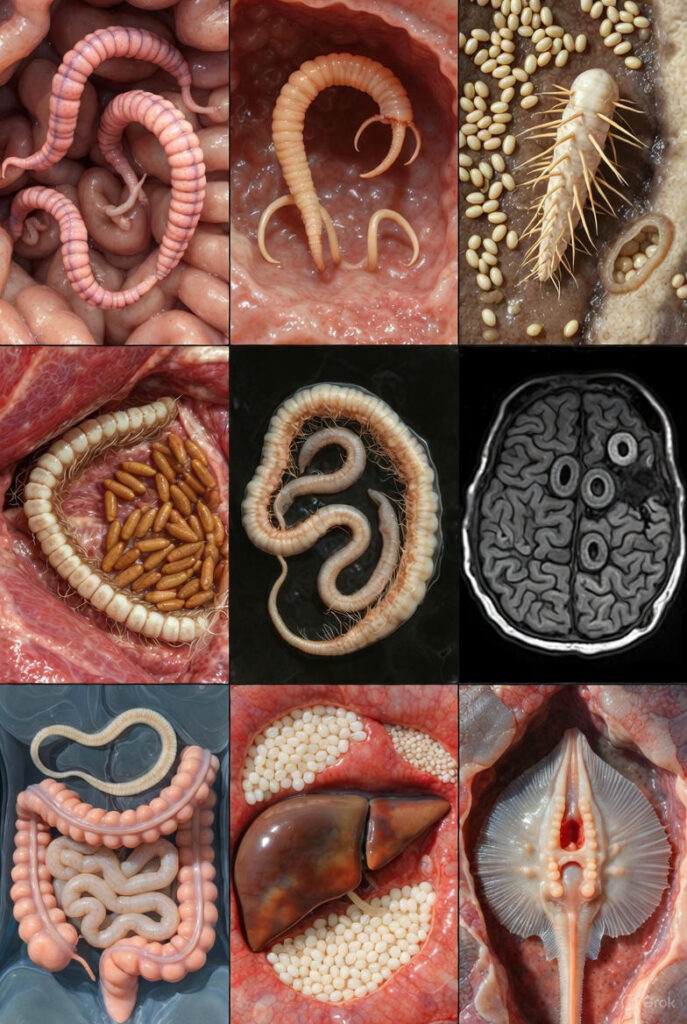
- Ascaris lumbricoides (large intestinal roundworm) World’s most common worm infection (≈800 million people). Eggs are swallowed from contaminated soil/food. Larvae migrate through lungs before maturing in the intestine. Heavy infections can cause bowel obstruction in children.[Image: Adult Ascaris worms passed after treatment – they can reach 35 cm / 14 inches long] Adult Ascaris lumbricoides
- Hookworm (Ancylostoma duodenale & Necator americanus) Larvae in soil penetrate bare feet → travel to lungs → swallowed → attach to small intestine and drink blood. Major cause of anemia in the tropics.[Image: Hookworm attached to intestinal lining] Hookworm in intestine
- Pinworm (Enterobius vermicularis) Most common worm in North America and Europe, especially in children. Causes intense anal itching at night (female worms lay eggs around anus).[Image: Pinworm eggs under microscope and adult female] Pinworm
- Trichinella spiralis (Trichinosis) From undercooked pork or wild game (bear, boar). Larvae encyst in muscles → severe muscle pain, fever, swelling around eyes.
2. Tapeworms (Cestodes)
Long, flat, ribbon-like worms that live in the intestine.
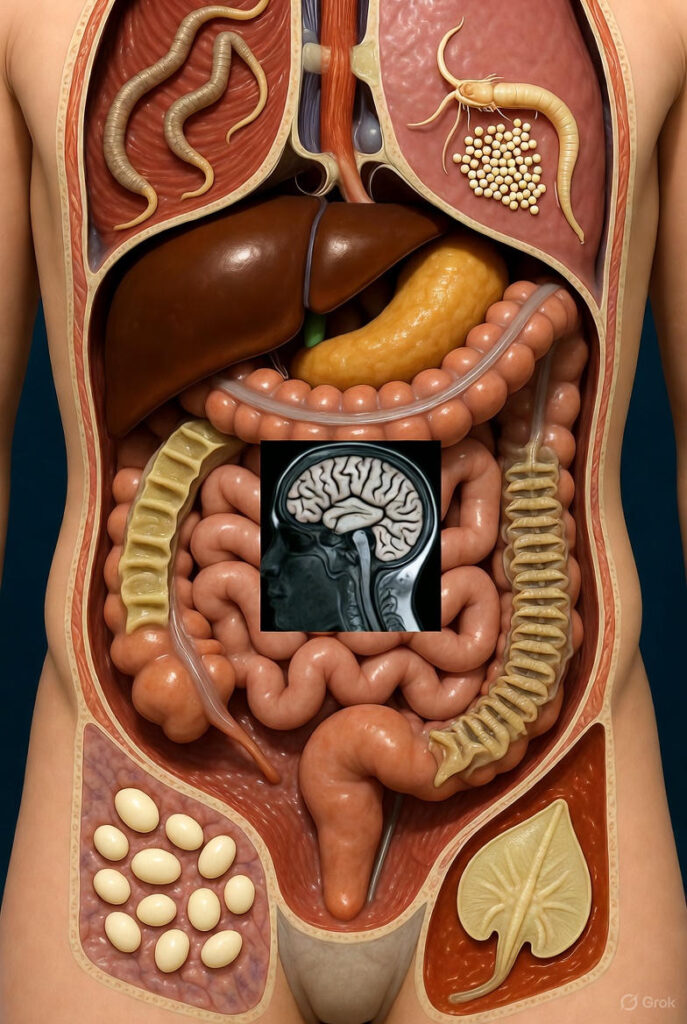
- Taenia saginata (beef tapeworm) and Taenia solium (pork tapeworm) From undercooked beef or pork. Can grow >10 meters long. T. solium is dangerous: if eggs are swallowed (fecal-oral), larvae can form cysts in brain/muscles → neurocysticercosis (a leading cause of epilepsy in developing countries).[Image: Adult beef tapeworm – note the segments (proglottids)] Taenia saginata[Image: Pork tapeworm cysts in brain (neurocysticercosis) on MRI] Neurocysticercosis MRI
- Diphyllobothrium latum (fish tapeworm) From raw or undercooked freshwater fish (sushi, ceviche). Can cause vitamin B12 deficiency.
3. Flukes (Trematodes)
Leaf-shaped flatworms.
- Schistosoma (blood flukes) Second most important parasitic disease after malaria (≈240 million infected). Larvae in freshwater penetrate skin while swimming/wading → live in blood vessels. Chronic infection → liver, bladder damage, bladder cancer.[Image: Schistosoma mansoni eggs in tissue] Schistosoma eggs
- Liver flukes (Clonorchis sinensis, Opisthorchis, Fasciola hepatica) From raw fish, watercress, or undercooked crab. Can cause bile-duct cancer.
How Do You Get Infected?
- Walking barefoot on contaminated soil (hookworm)
- Eating undercooked meat (tapeworm, Trichinella)
- Eating raw fish/crustaceans (fish tapeworm, liver flukes)
- Drinking or contact with contaminated freshwater (schistosomiasis)
- Poor hand hygiene (pinworm, Ascaris eggs)
Symptoms (vary by worm)
- Abdominal pain, diarrhea, bloating
- Anemia and fatigue (hookworm, heavy Ascaris)
- Anal itching (pinworm)
- Malnutrition and stunted growth in children
- Cough/wheezing when larvae migrate through lungs
- Neurological symptoms (neurocysticercosis)
Diagnosis
- Stool examination for eggs/segments
- “Scotch tape test” for pinworm
- Blood tests (eosinophilia, serology)
- Imaging (ultrasound, CT/MRI) for cysts
Treatment
Almost all worm infections are easily treated with oral medications:
- Albendazole or Mebendazole (roundworms, hookworm, pinworm)
- Praziquantel (tapeworms, flukes, schistosomiasis)
- Ivermectin (strongyloidiasis, sometimes used off-label)
One or two doses usually cure the infection completely.
Prevention
- Cook meat thoroughly
- Freeze fish destined for raw consumption (−20 °C for 7 days)
- Wear shoes in endemic areas
- Wash hands and vegetables
- Avoid swimming in freshwater in tropical countries
- Deworming programs (albendazole/mebendazole) in schools in high-burden countries
Even though parasitic worms sound horrifying, they are almost always curable and, with basic hygiene and food safety, completely preventable.
