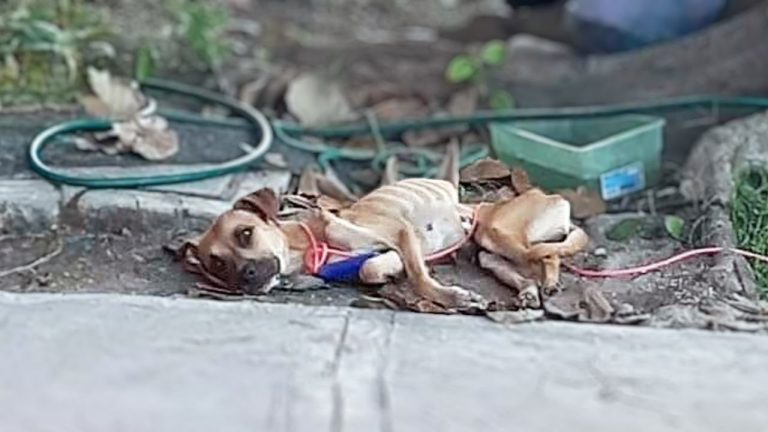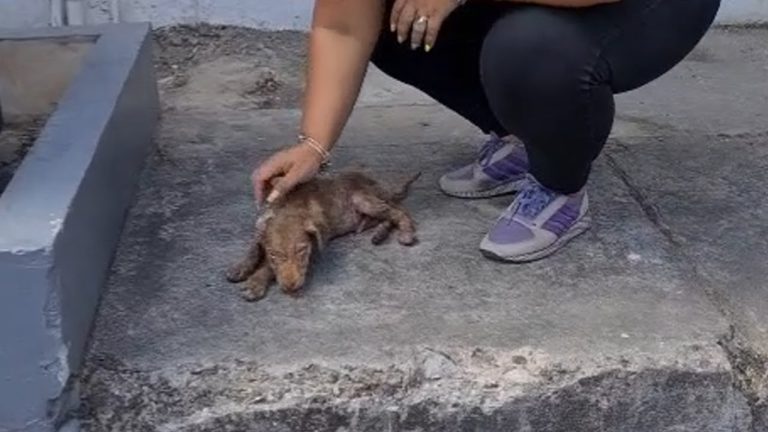
In a quiet public square in Tucumán, where the smell of freshly cooked meals drifted from nearby restaurants and people moved about their daily routines, a tiny life was slipping away almost unnoticed.
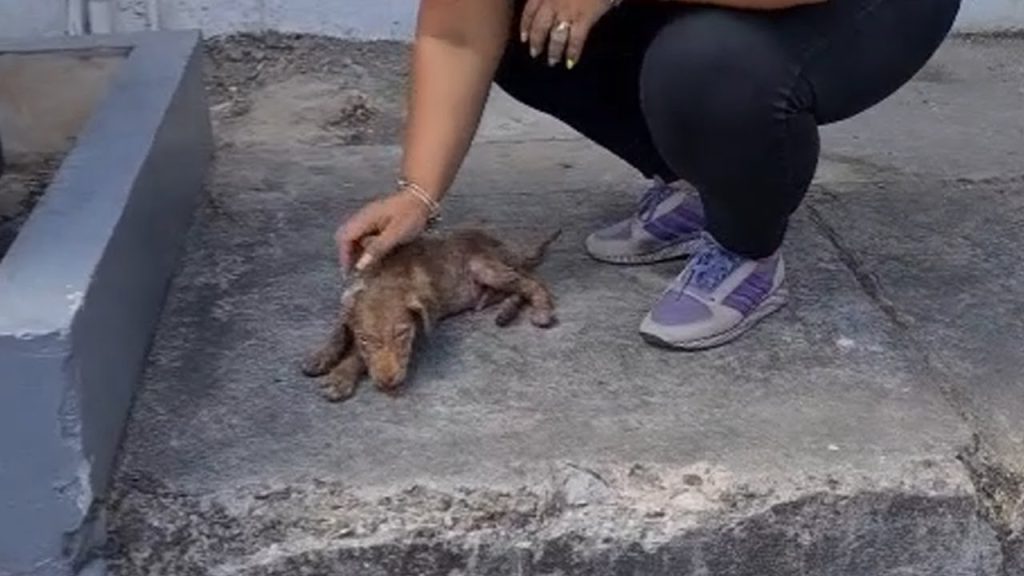
He was only two months old.
The little puppy, later named Phoenix, lay on the ground with a body so thin it seemed impossible he was still alive. His ribs pressed sharply against fragile skin, his legs too weak to carry him anywhere, his strength nearly gone. Hunger had taken everything from him—his energy, his voice, even his ability to cry out.
Yet his eyes still moved.
They followed the food.
From the ground, Phoenix watched people walk in and out of restaurants, carrying plates, laughing, talking, living their lives. Every movement, every scent, every passing moment reminded him of something his body desperately needed but could no longer reach.
He didn’t move toward them.
He couldn’t.
There was no anger in his eyes. No fear either. Just a quiet, fading hope—like a small light flickering in the wind, refusing to go out.
People passed by.
Some glanced.
Most didn’t stop.
And the world kept moving.
Until one person finally saw him.
Not just the small body lying on the ground, but the life inside it—the silent struggle, the fragile will to survive. This stranger approached slowly, carefully, as if afraid the moment might disappear if rushed.
When a gentle hand reached down and touched Phoenix for the first time, something remarkable happened.

About the Author