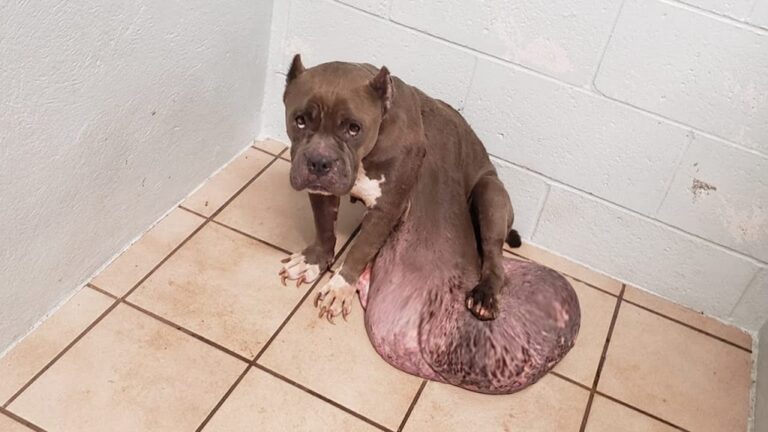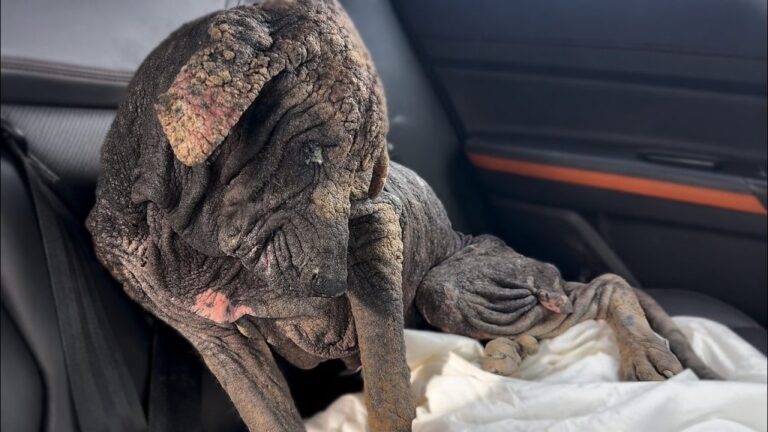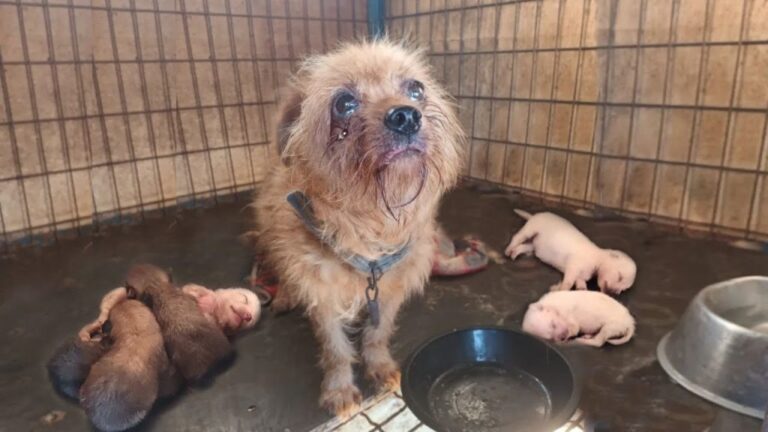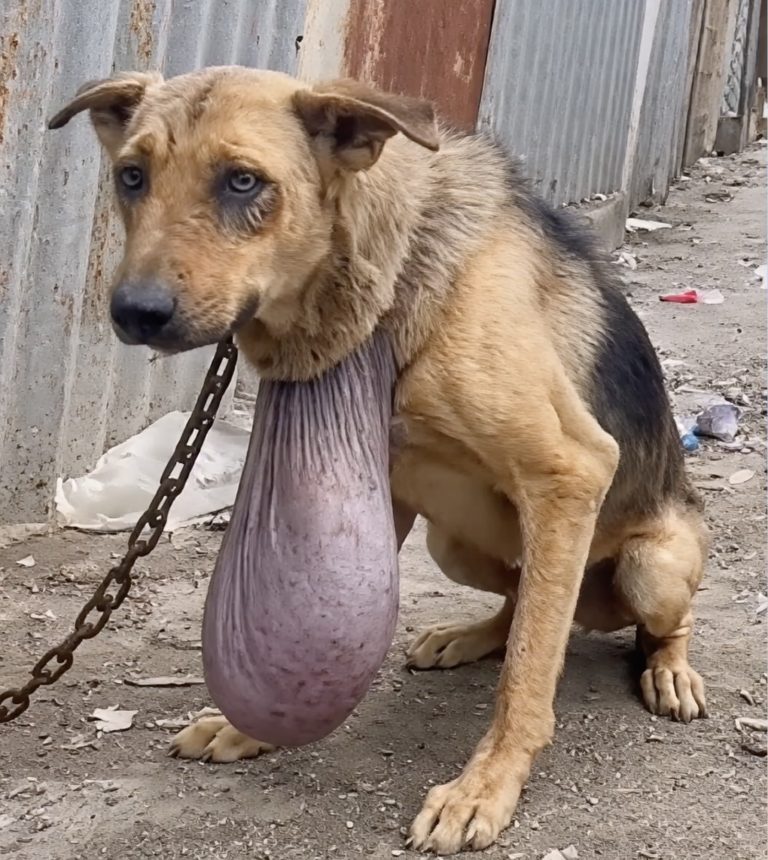
Jordan’s story is one that settles deep in the heart and refuses to let go. For years, he lived a life no living creature should ever endure. Chained in a desolate, forgotten stretch of land, he existed among piles of trash and debris, with no shelter from the elements and no steady source of comfort. The heavy metal chain around his neck was more than just a physical restraint—it was a symbol of abandonment. Day after day, season after season, he remained there, watching the world move on without him.
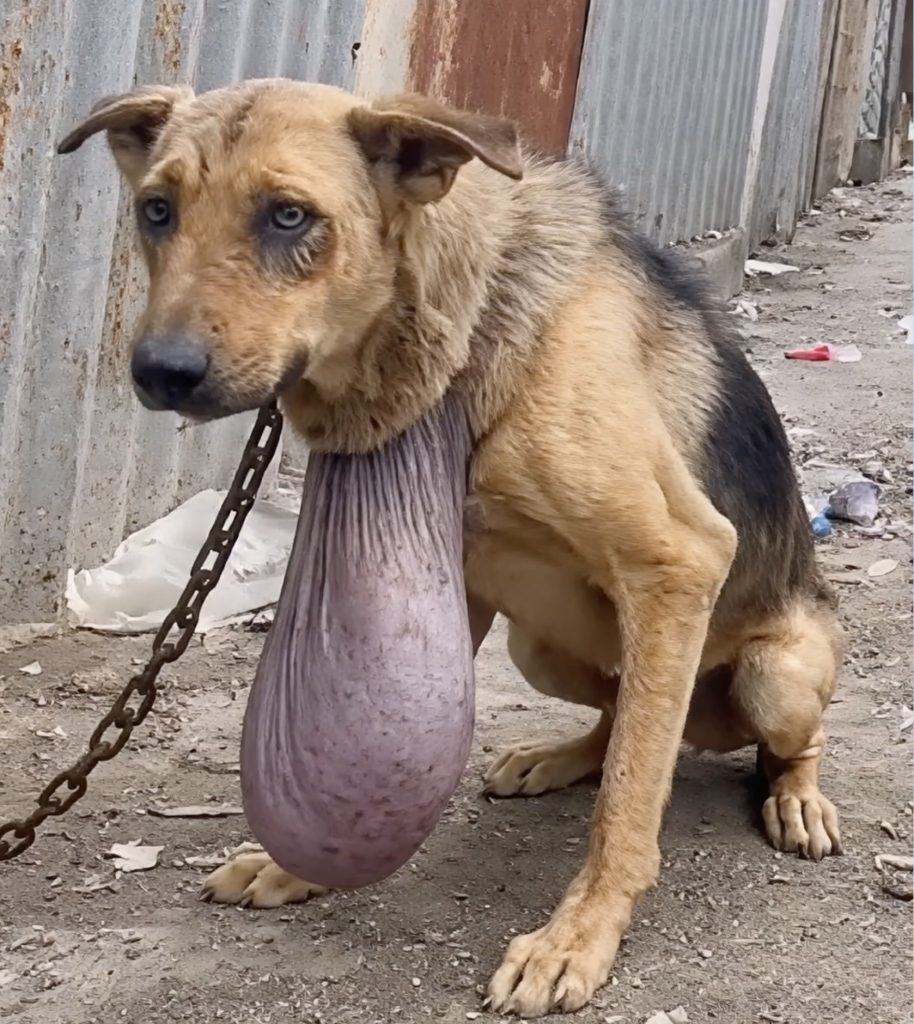
There was no soft bed waiting at night. No gentle hand to reassure him. No voice calling his name with kindness. Instead, Jordan slept on hard, dirty ground, surrounded by refuse, exposed to heat, cold, wind, and rain. The place that should have offered protection instead became a prison. Anyone who should have cared for him failed to do so. Yet even in those harsh conditions, something inside him endured. He survived. He held on.
Resilience is a quiet strength. It does not roar or demand attention. It simply persists. Jordan embodied that quiet strength. Though neglected and confined, he did not lose the spark that makes a dog trust, hope, and long for connection. Beneath the fear and grime, beneath the weight of the chain, there remained a soul that had not given up.
Everything changed the day rescuers arrived. They saw what others had overlooked. They recognized not just a chained dog in a wasteland, but a life worth saving. Approaching him carefully, with patience and compassion, they began the delicate work of earning his trust. Years of isolation had left him unsure, cautious, uncertain of human intentions. But kindness has a language of its own, and slowly, Jordan responded.
When the heavy metal chain was finally cut, it marked more than a physical release. It was the first true breath of freedom he had known in years. The sound of metal falling away carried profound meaning. For the first time in a very long time, Jordan could move without being pulled back. He could take a step forward without feeling resistance at his neck. Freedom, something most of us take for granted, became a brand-new experience for him.
He was taken to a veterinary clinic where his long-overdue care began. The staff examined him gently, aware that healing would require both medical attention and emotional reassurance. A much-needed bath washed away layers of dirt and neglect. As the grime disappeared, so did some of the visible reminders of his painful past. Beneath the filth was a beautiful dog who had simply been forgotten.
Medical treatment addressed the physical toll of years spent outdoors without proper care. Nourishing food replaced scraps. Clean water replaced uncertainty. Soft bedding replaced bare ground. With each small act of kindness, Jordan’s body began to recover. But perhaps even more remarkable was the way his spirit began to lift.
At first, his movements were tentative. He flinched at sudden gestures. He seemed unsure whether comfort was permanent or temporary. Trauma does not vanish overnight. Yet day by day, he began to show signs of trust. His eyes, once clouded with fear, softened. His tail, once still, began to wag. The transformation was not instant, but it was steady and genuine.
As weeks passed, the frightened dog who had once lived in filth revealed his true personality. He discovered the joy of play. Toys that might have been meaningless before suddenly became treasures. He learned that human hands could offer gentle strokes instead of neglect. He discovered that being held did not mean being restrained—it meant being cherished.
Watching him blossom was breathtaking. The contrast between who he had been and who he was becoming spoke volumes about the power of compassion. Jordan was not defined by the years he spent chained. He was defined by his capacity to heal, to trust again, and to embrace a new beginning.
Eventually, Jordan found something even more profound than medical care or temporary shelter: he found a family. In his new home, he no longer faced empty stretches of land or heaps of trash. Instead, he found warmth. He found a comfortable bed waiting for him each night. He found people who spoke his name with affection and meant it.
For a dog who once knew only confinement, the simple routines of family life became extraordinary gifts. Mealtimes were predictable and nourishing. Walks were opportunities to explore, not moments of fear. Even quiet evenings became precious, as he curled up close to those who loved him. The constant affection he now receives stands in stark contrast to the neglect he once endured.
Jordan is no longer a prisoner of his past. The chain that once defined his existence is gone, replaced by bonds of love and loyalty. His story serves as a powerful reminder that no soul is beyond redemption. Even after years of hardship, healing is possible when compassion steps in.
For many viewers, especially those who have seen life’s hardships firsthand, Jordan’s journey resonates deeply. It speaks to the resilience that can exist even in the darkest seasons. It reminds us that small acts—cutting a chain, offering a bath, providing a warm bed—can alter the entire trajectory of a life.
Compassion is not abstract. It is practical, tangible, and transformative. It shows up in the hands that reach out, in the voices that soothe, and in the commitment to see a life through its recovery. Jordan’s story proves that when someone chooses to care, the ripple effect is immeasurable.
Today, when Jordan runs freely or rests peacefully beside his family, he represents more than a rescued dog. He represents hope. He stands as living evidence that even a broken beginning does not have to determine the ending. And in a world that can sometimes feel overwhelming, his journey offers a quiet but powerful reassurance: love, when given freely and faithfully, can restore even the most wounded heart.

About the Author