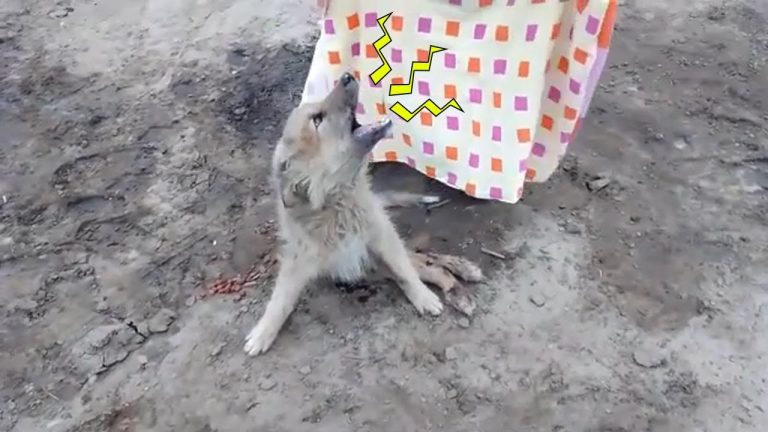
Timosha’s story begins on a quiet roadside, where a small puppy lay injured and terrified, his young body overwhelmed by pain and fear. He had suffered severe trauma, injuries so serious that it was impossible for him to stand or run. Every instinct told him to escape, yet his hind legs could not respond. Panic froze him in place, and when help finally arrived, he reacted not with trust but with desperation, trying to drag himself away despite the agony coursing through his body.
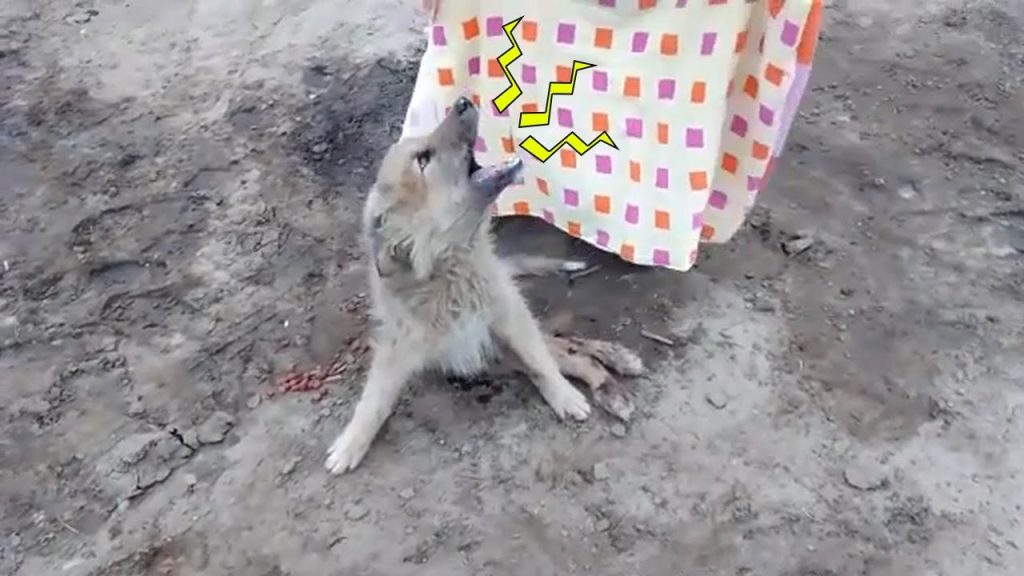
The rescuers who found Timosha understood immediately that he was in critical condition. They moved slowly and gently, aware that even the slightest movement could cause him further harm. His eyes reflected confusion and terror, the kind that comes when an animal cannot understand why its body has betrayed it. Still, they persevered, knowing that leaving him there would almost certainly mean the end of his life.
At the veterinary clinic, the reality of Timosha’s condition became painfully clear. Examinations revealed a fractured spine and severe damage to his spinal cord. These were not minor injuries that time alone could heal. The prognosis was grim, and the odds were stacked heavily against him. For many animals, injuries of this magnitude mark the end of the road. Yet even in the face of such devastating news, the veterinary team and rescuers refused to give up.
A complex and risky surgery was the only chance Timosha had. It was a decision made with heavy hearts and cautious hope, understanding that survival was not guaranteed and recovery would be long and uncertain. When the procedure was finally completed and Timosha awoke, the hardest part of his journey was only just beginning.
The days that followed were filled with careful monitoring, pain management, and constant support. Timosha could not move his back legs, and each small adjustment required patience and precision. Recovery was slow, measured not in dramatic leaps but in subtle signs of progress. A calm gaze, a steady breath, a flicker of recognition when familiar voices were near. These moments, though small, carried immense meaning.
As weeks passed, physical therapy became a central part of Timosha’s life. Sessions were gentle yet consistent, designed to strengthen what remained functional and to help him adapt to his changed body. There were moments of frustration and exhaustion, but there was also determination. Timosha began to show an understanding that he was safe, that the hands guiding him were there to help, not harm.
One of the most significant turning points came when Timosha was introduced to a specially designed wheelchair. At first, it was an unfamiliar and awkward device. He hesitated, unsure of how to move or what to expect. But with encouragement and repeated practice, something remarkable happened. Timosha began to roll forward on his own, rediscovering a sense of independence that had seemed lost forever.
Learning to navigate the world on wheels was not easy. It required balance, coordination, and trust in both the equipment and the people around him. Yet day by day, Timosha grew more confident. His movements became smoother, his posture stronger, and his spirit noticeably brighter. Where there had once been fear and confusion, there was now curiosity and engagement.
What stands out most in Timosha’s journey is not just his physical adaptation, but his emotional resilience. Despite enduring trauma and a life-altering injury, he did not retreat into despair. Instead, he responded with a quiet strength that inspired everyone who witnessed his progress. His willingness to try again, to move forward despite limitations, became a powerful reminder of the resilience animals possess.
Timosha’s daily routine evolved into one filled with structure and care. Therapy sessions, rest periods, gentle play, and moments of affection all played a role in his continued improvement. Each day brought small victories, whether it was maneuvering a turn more smoothly or showing excitement at the start of a new day. These incremental achievements added up, forming a life that was not defined by loss, but by adaptation.
For those involved in his care, Timosha became more than a patient. He became a symbol of hope and perseverance. His story challenged assumptions about disability and quality of life, demonstrating that joy and fulfillment are still possible even when circumstances change dramatically. He showed that with proper support, patience, and compassion, animals can thrive in ways that many might not expect.
Timosha’s journey serves as a testament to the power of second chances. It highlights the importance of humane intervention, medical dedication, and long-term commitment to recovery. His life did not return to what it once was, but it became something new, shaped by resilience and care.
Today, Timosha moves forward with confidence, his wheelchair no longer a symbol of limitation, but of possibility. His progress continues, not measured by what he cannot do, but by everything he has learned to do again. His story reminds us that courage does not always roar. Sometimes, it is found in quiet persistence, in the determination to keep going even when the path ahead looks uncertain.
Through Timosha, we are reminded that the spirit of an animal can be unbreakable. Faced with overwhelming odds, he chose life, adaptation, and trust. His journey is a powerful example of what can happen when compassion meets perseverance, and it leaves a lasting impression on all who take the time to truly see him.
His presence now speaks softly yet clearly about survival, dignity, and value of kindness.

About the Author