
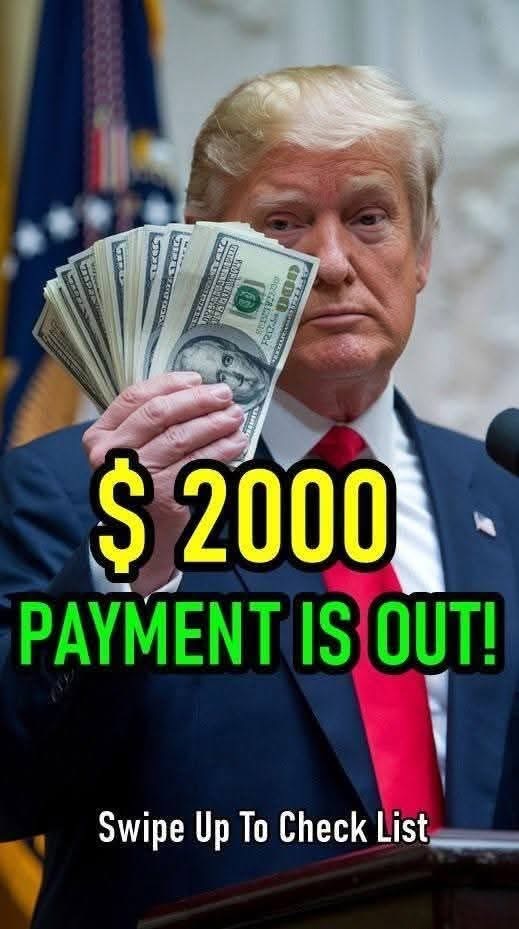
Social media, text messages, and viral posts have exploded with one startling claim: that a new $2,000 “Trump payment” is being sent outand that Americans should urgently “check the list” to see if their name appears. For many families struggling with inflation, rising housing costs, medical bills, and everyday expenses, the idea of a surprise $2,000 payment sounds like a lifeline.
But as excitement spreads, so does confusion.
Is this payment real? If so, who qualifies? How would the money be distributed? And most importantly—how can people avoid being scammed while searching for answers?
Here’s what we actually know right now, what remains unverified, and what you should do immediately if you see posts claiming that your name might be on a payment list.
Where Did the $2,000 Trump Payment Claim Come From?
The rumor appears to have started from a combination of:
- Misinterpreted political statements
- Old stimulus payment discussions from prior years
- Political fundraising emails using misleading language
- Scam websites imitating government payment portals
Some social posts falsely suggest that this is a new federal relief check personally authorized by Donald Trump, while others describe it as a “special election-year payment” or “patriotic rebate.”
However, as of now, there is no official federal program confirmed by the U.S. Treasury, IRS, or Congress authorizing a new universal $2,000 payment tied to Donald Trump.
That doesn’t mean assistance programs don’t exist—it just means this specific claim has not been verified by any government source.
Why So Many People Believe It Could Be Real
The belief isn’t random. Several factors make this story emotionally powerful and highly shareable:
- Trump previously supported $2,000 stimulus checks during the COVID era in 2020.
- Many Americans still associate large direct payments with that time.
- Economic strain remains severe for millions.
- Election seasons often bring real proposals for financial relief.
Scammers and clickbait publishers understand this psychology perfectly. They frame rumors to look just believable enough to spark mass sharing before facts can catch up.
What Real $2,000 Payments Have Existed in the Past?
It’s important to separate historical fact from current rumor.
In late 2020 and early 2021:
- Americans received $600 checks, then later $1,400 checks
- Combined, those totaled $2,000
- These were authorized by Congress and distributed through the IRS
Those payments:
- Are long finished
- Are no longer being issued
- Have no active distribution lists today
Any website claiming to show a current national name list for stimulus payments is almost certainly fraudulent.
Who Would Qualify If a New Payment Were Ever Approved?
If Congress were to approve a legitimate $2,000 payment in the future, eligibility would likely mirror past stimulus rules, which typically included:
- U.S. citizens or legal residents
- Individuals earning under a specific income threshold
- Seniors on Social Security
- Veterans receiving benefits
- Families with dependents
- Disabled individuals receiving SSI or SSDI
Payments would never be distributed based on:
- Social media comments
- Email signups
- Political party affiliation
- Online “name lists”
Any site claiming otherwise is a major red flag.
How Would Real Payments Be Distributed?
If a genuine federal stimulus or relief payment is ever approved again, distribution would occur through:
- Direct deposit via the IRS
- Paper checks mailed to verified addresses
- Prepaid debit cards issued by the Treasury
You would not need to:
- Pay a fee
- Enter bank logins on random websites
- Share your Social Security number online
- Click suspicious links
The IRS and U.S. Treasury never notify people of payments through social media posts or viral ads.
Key Dates People Are Claiming — And Why They Don’t Add Up
Many viral posts list fake “release dates” such as:
- “Payments begin Friday”
- “List goes live at midnight”
- “Final batch sent this week”
The problem? None of these dates appear on:
- IRS.gov
- Treasury.gov
- Congressional releases
- Federal budget announcements
That absence is crucial. Real payments always come with official press releases, not anonymous screenshots or encrypted links.
The Most Dangerous Part: Fake “Name Lists”
Perhaps the most alarming trend is the rise of websites claiming:
- “Search the $2,000 Trump Payment List”
- “Enter your name to see if you qualify”
- “Instant approval checker”
These sites commonly:
- Collect personal data
- Request phone numbers and emails
- Ask for bank or debit card details
- Install tracking software on devices
Once your information is submitted, it can be used for:
- Identity theft
- Financial fraud
- Repeated scam targeting
- Unauthorized account access
No real government payment program ever works this way.
Why the Rumor Keeps Growing
Even after repeated fact-checks, the rumor continues to spread because:
- It offers hope during financial stress
- It uses political loyalty language
- It triggers fear of missing out
- It creates urgency with phrases like “last chance” or “final list”
This mix makes people click fast—and verify later, if at all.
