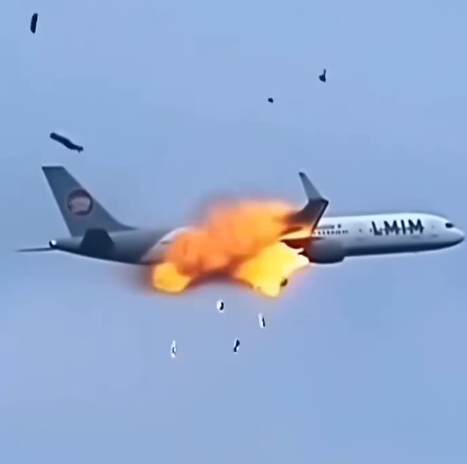
Tragedy struck the skies today as reports emerged of a catastrophic plane crash involving a commercial passenger jet carrying over 244 people. The exact details of the flight—including the airline, departure city, and destination—remain unconfirmed, but the severity of the disaster is already becoming heartbreakingly clear. Eyewitnesses described horrifying scenes: towering flames, thick black smoke billowing into the sky, and scattered debris strewn across a wide area, a chaotic testament to the sheer force of the impact. Emergency responders rushed to the scene, their sirens wailing, as the air around the crash site filled with heat, smoke, and panic.
First responders faced an unimaginable challenge. Firefighters, paramedics, and law enforcement officers moved quickly under extreme pressure, coordinating efforts to extinguish the flames while simultaneously searching for survivors amid the wreckage. Thick clouds of smoke made visibility nearly impossible, and the risk of secondary explosions added urgency to every movement. Medical teams established triage areas on the perimeter, preparing to receive the injured. Helicopters hovered above, attempting to assess the scene from the air, relaying vital information to ground crews who were racing against time.
Witnesses at the crash site described a scene of chaos and disbelief. Some spoke of passengers trapped amid wreckage, calling out for help, while others described the harrowing sight of families and bystanders running toward the flames in desperate attempts to rescue loved ones. Emergency services were stretched thin, coordinating under conditions that defied preparedness drills, with the safety of both rescuers and survivors hanging in a delicate balance.
At this stage, investigators are still working to determine the cause of the disaster. Aviation experts are exploring multiple possibilities. Mechanical failure is among the first theories being examined, including engine malfunction or critical structural failure during flight. Pilot error remains a potential factor, as investigators review flight communication logs and cockpit recordings, hoping to understand the sequence of decisions and events that preceded the crash. Meanwhile, meteorologists are reviewing weather reports, considering whether severe storms or turbulence could have contributed to the tragedy. The black box, once recovered from the wreckage, will be central to piecing together the final moments of the ill-fated flight.
The human cost of the disaster is already beginning to unfold. Hospitals in surrounding regions have been placed on high alert, preparing to receive casualties with serious injuries ranging from burns and broken bones to smoke inhalation. Staff worked around the clock, organizing emergency protocols and preparing trauma units for the sudden influx of patients. Meanwhile, families of passengers are being directed to emergency response centers, where they wait anxiously for news about their loved ones. The tension in these centers is palpable—every phone call, every glimpse of an arriving ambulance brings a wave of hope and despair in equal measure. Volunteers and mental health professionals have been deployed to support the families, providing counseling, information, and comfort during an overwhelmingly uncertain time.
As the tragedy unfolded, social media became a reflection of collective shock. Messages of sympathy, prayers, and solidarity poured in from across the globe. Friends, relatives, and even strangers shared stories of the victims, highlighting the profound sense of loss that touched countless communities. Journalists and news outlets worked tirelessly to provide updates, though the fast-moving nature of the story and lack of verified information fueled anxiety and speculation. Meanwhile, aviation authorities promised full transparency, emphasizing that a thorough investigation would follow and that the world would eventually understand how such a disaster occurred.
Governments and global leaders were quick to respond. Statements expressing condolences and support were released almost immediately, acknowledging the gravity of the situation and pledging cooperation with ongoing investigations. International aviation agencies mobilized resources and experts to assist in analyzing flight data, wreckage evidence, and safety procedures. The goal is not only to determine what happened but also to prevent a similar catastrophe in the future. Investigators face a complex, painstaking task: reconstructing the events from a wreckage site that spans miles, where every fragment may hold a clue to understanding the tragedy.
The psychological impact of the event cannot be understated. Passengers on flights elsewhere reported heightened anxiety, as the news reminded the public of the inherent risks of air travel. Airlines around the world responded with statements assuring travelers of safety protocols, maintenance checks, and the rigorous training of pilots and crew. Nevertheless, the images of the crash site and the human toll evoke a sense of vulnerability that transcends borders. Entire communities were left grieving, connected not just by proximity but by a shared experience of shock and sorrow.
Eyewitness accounts from people near the crash site were particularly harrowing. Some described seeing people trapped in mangled fuselage fragments, waving frantically for help. Others spoke of flames consuming entire sections of the aircraft, sending thick smoke spiraling into the sky and leaving a scene that resembled an apocalyptic landscape. Emergency crews worked tirelessly in these conditions, sometimes having to make split-second decisions that could mean life or death. The intensity of the operation highlighted not only the bravery of first responders but also the scale of human tragedy that unfolds in moments like these.
Investigators are now focusing on several critical steps. Securing the crash site is a priority, both to preserve evidence and to ensure the safety of rescue teams. Once the area is stabilized, teams will begin examining the debris pattern, fuel remnants, and mechanical components to determine whether technical failure played a role. Meanwhile, efforts to recover the black box and cockpit voice recorder continue, as these devices are crucial for understanding what occurred in the final minutes of flight. Every piece of information, no matter how small, could shed light on a sequence of events that is currently shrouded in mystery.
The families of passengers face the agony of uncertainty. With over 244 people on board, the potential for widespread loss is staggering. Emergency centers have become hubs of grief and anticipation, staffed by counselors trained to guide loved ones through the initial shock. Waiting for news has become an exercise in endurance, with families clinging to hope that some survivors may emerge despite the devastation. The scenes at these centers are a reflection of the human cost behind every statistic—a reminder that every number represents a life, a story, and a family forever changed.
International attention has turned toward the disaster as well. Media outlets from multiple countries are providing continuous coverage, bringing the story to a global audience. Experts from aviation safety boards, airline associations, and independent analysts are weighing in on possible causes, adding depth and perspective to the ongoing investigation. Governments are coordinating with airlines to ensure passenger manifests are verified, contact lists are compiled, and support systems are in place for families both near and far.
The impact of such a disaster extends beyond the immediate victims. Communities, airports, and airline personnel are all affected by the tragedy. Flight operations may be delayed or rerouted, security and safety protocols revisited, and airline staff offered counseling to cope with the psychological toll of being connected, even indirectly, to such a catastrophic event. Training programs and safety checks across the industry are likely to be reevaluated in light of the investigation’s findings, with a shared goal of preventing future tragedies.
Despite the chaos, there are moments of humanity shining through. Strangers working together to guide the wounded, pilots and crew coordinating emergency measures, firefighters risking their own lives to rescue survivors—these acts provide a small but important counterpoint to the enormity of the loss. Even in the midst of disaster, the human instinct to help, to support, and to persevere becomes apparent, highlighting resilience in the face of overwhelming adversity.
As the investigation continues, the world waits. Questions remain about why the flight encountered disaster, whether warning signs were missed, and what measures could have prevented the tragedy. The process of piecing together the events will take time, and answers may not come quickly. Yet there is hope, both in the potential recovery of survivors and in the eventual understanding of what went wrong. Knowledge gained from the investigation could save lives in the future, offering some solace amid immeasurable grief.
This devastating event marks one of the darkest moments in recent aviation history. With lives lost and many more unaccounted for, it is a global tragedy, uniting people in sorrow and concern. The combined efforts of first responders, investigators, and international agencies reflect humanity’s determination to find clarity, justice, and understanding. While the immediate focus is on rescue and recovery, the long-term implications for safety, regulation, and awareness will be profound.
In the end, the disaster is a stark reminder of the fragility of life, the unpredictability of events, and the importance of compassion and preparedness. As the world mourns the victims, supports the families, and works toward answers, this event will leave a lasting imprint on aviation, policy, and collective memory. Communities, governments, and individuals alike are bound together in grief, reflection, and the hope that from tragedy, lessons will emerge to prevent similar calamities in the future.

About the Author