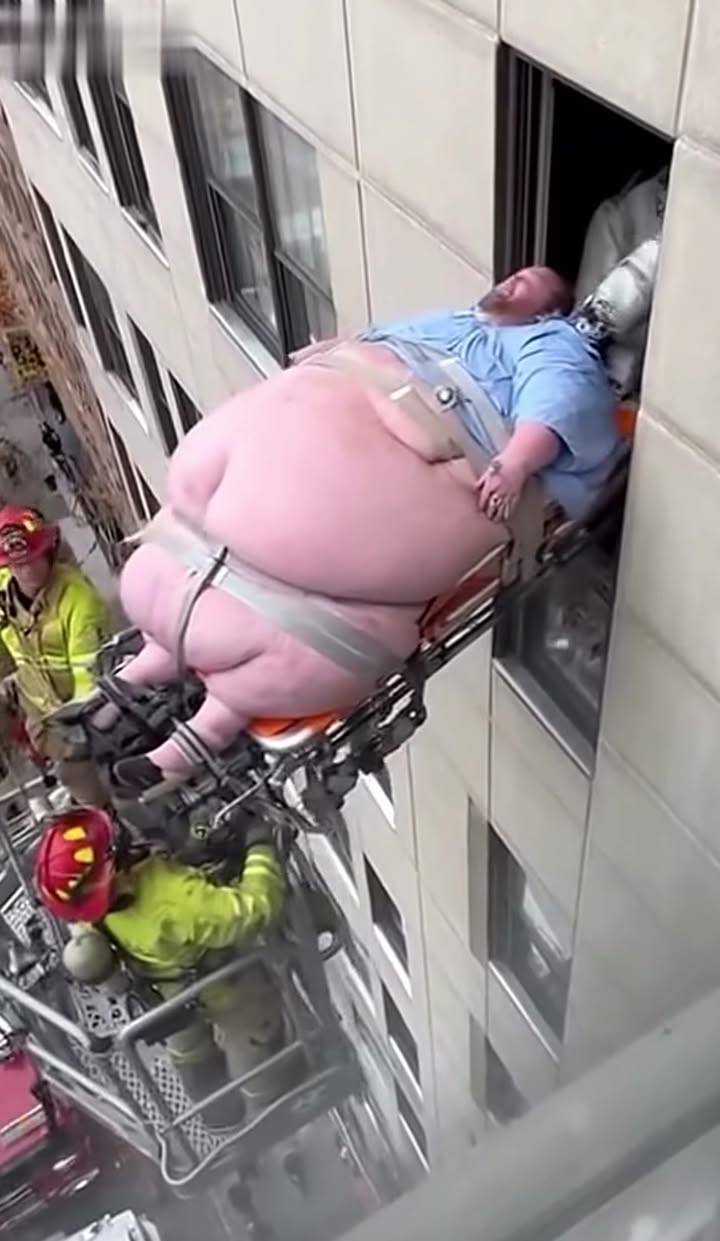
A highly complex rescue operation was carried out for a patient with morbid obesity who required urgent hospital transport. The patient was located on the seventh floor of an apartment building, and due to his extremely high body weight and fragile medical condition, transport via the staircase or elevator was impossible. Under these circumstances, the specialized fire-rescue team decided to extract him through the window, using advanced lifting equipment and specialized rescue techniques.
The operation required full coordination among professionals, detailed planning, and a careful assessment of all potential risks. Firefighters ensured that the building’s structural integrity was sufficient to withstand the required load, while medical teams remained by the patient’s side to monitor his condition throughout the entire procedure. Every step was executed with extreme caution, following strict safety protocols for high-altitude rescue and the transport of high-risk patients.
Why are patients in such extreme conditions extracted through a window?
This approach is used when internal routes—such as hallways, staircases, or elevators—are too narrow, unsafe, or pose a risk to either the patient or the rescue team. In these cases, removing or enlarging a window creates an external extraction corridor that allows the use of lifting platforms, rescue cranes, or other specialized equipment.
What is the “clinical limit” at which window extraction becomes the only safe option?
There is no universal, fixed number that defines such a situation. The decision is always made individually and is based on several factors, including:
- the patient’s medical stability and mobility;
- architectural limitations of the building (width of hallways, stairs, elevator size);
- available equipment and the technical capacity of the rescue team;
- assessment of structural and operational safety for all involved.
When all internal paths are determined to be unsafe or unfeasible for patient transport, window extraction becomes the safest and most controlled solution.

About the Author